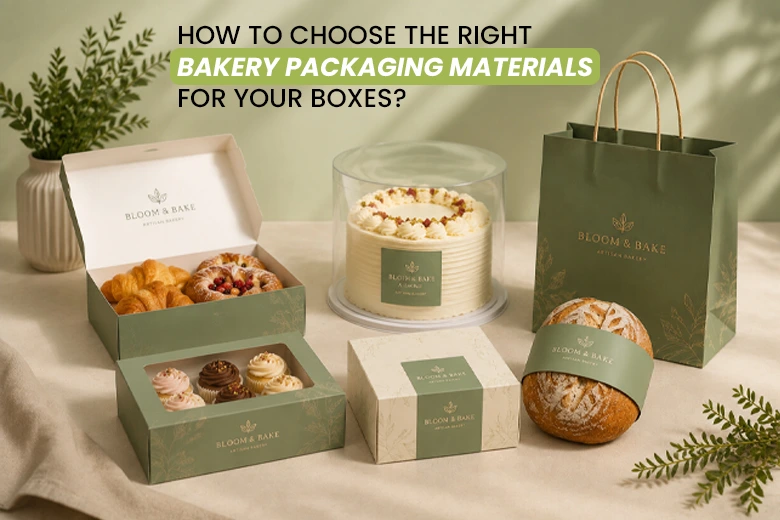
The material you choose to manufacture your professional bakery packaging boxes matters a lot for any retail or bakery brand. Working in the packaging industry, I have seen many incredible recipes fail not because they were not baked well, but because of the packaging they were using.
Imagine you spend hours perfecting a sourdough or delicate pastries, only to have it arrive at the customer’s doorstep in a greasy, flimsy container. This will not only ruin the customer experience, but it will also harm your brand image.
In this detailed guide, I will walk you through how to choose the perfect packaging material for your bakery boxes and how it affects the customer experience.
Why Bakery Packaging is a Strategic Investment for Brands?
Most businesses overlook the importance of bakery packaging. Bakery packaging is the one thing that keeps your freshly baked products intact even in the harsh conditions of transit.
For example, choosing the wrong weight-bearing capacity packaging can ruin the product. A cake might weigh 3 to 5 pounds, but during transit, a sudden car stop can put pressure on the box corners. If you choose the wrong material for your bakery box, it can ruin the cake’s shape and texture before it even arrives at the customer’s doorstep.
In my years of experience, I have found that switching from 14pt SBS cardstock to a 16pt-18pt cardstock can make a whole lot of difference in the build of custom bakery boxes. It’s the difference between packaging that performs and packaging that fails.
For those who are moving their baked items in larger volumes, using durable packaging materials for their bakery packaging boxes with reinforced bottom flaps is non-negotiable.
Want to learn more about why bakery packaging matters a lot? Read our detailed bakery packaging guide to understand better.
Now that you know why bakery packaging is a strategic investment, let’s see what material options you have.
Types of Bakery Packaging Materials
Different bakery products require different types of bakery boxes, each with material options that can house them perfectly. The material you choose for your bakery packaging offers structural integrity and keeps your product safe during transit and handling.
There are various bakery packaging material options that you can choose for your bakery box packaging, and I have mentioned them below:
Kraft Paperboard
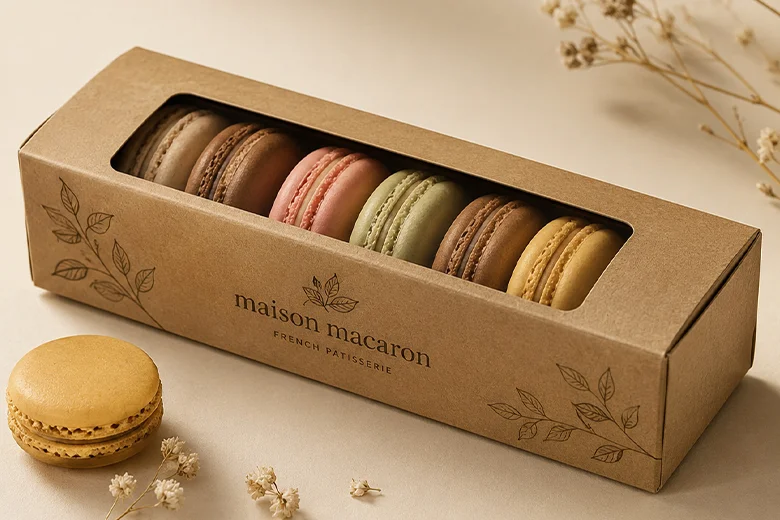
Kraft paperboard is a sustainable and lightweight packaging material made from natural wood pulp. It offers good strength while maintaining an eco-friendly appearance. Many bakeries prefer kraft packaging because it is recyclable, biodegradable, and suitable for products that do not require heavy protection.
Example: Macaron boxes, pastry boxes, pannetone boxes, and donut boxes are popular choices for artisan bakeries. A kraft macaron box with a clear window allows customers to view colorful macarons while keeping them protected during transport.
Cardboard
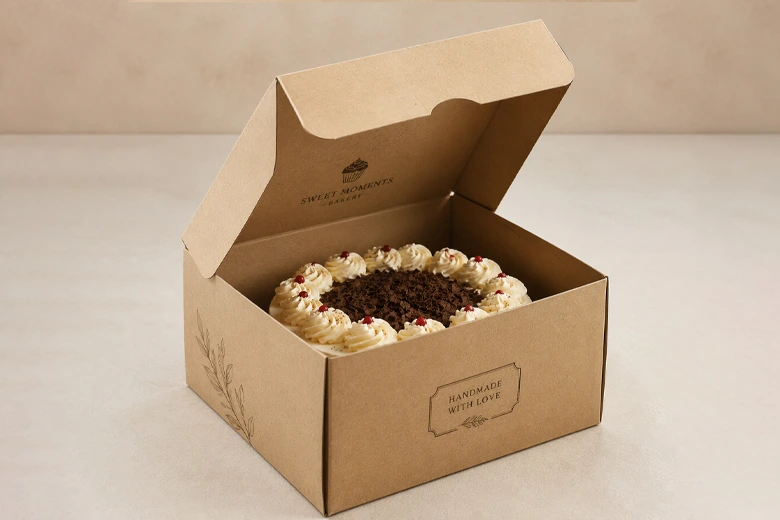
Cardboard is one of the most widely used bakery packaging materials because it is lightweight, printable, and cost-effective. It provides enough durability for everyday bakery products while supporting custom printing, coatings, and finishes that improve product presentation.
Example: Custom cake boxes, cupcake boxes, muffin boxes, cookie boxes, and pie boxes are commonly made from cardboard. A printed cupcake box with inserts keeps each cupcake upright and prevents frosting from touching the lid during delivery.
Corrugated Cardboard
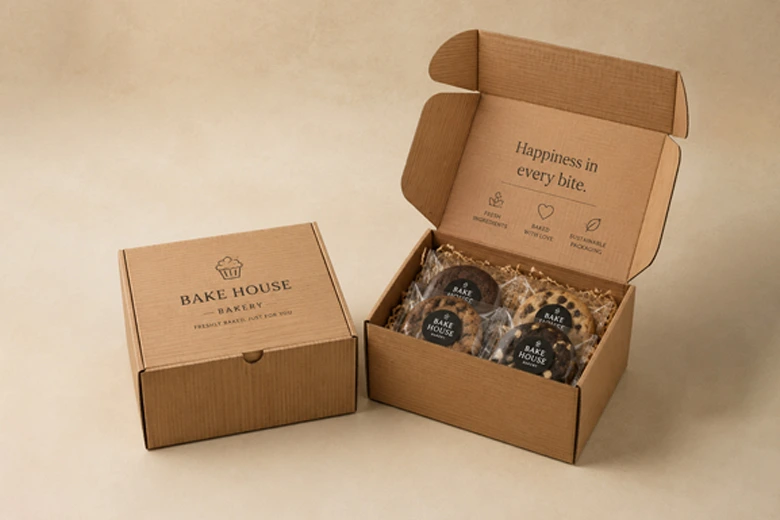
Corrugated cardboard consists of fluted layers sandwiched between linerboards, making it much stronger than standard cardboard. It offers excellent cushioning and compression resistance, making it ideal for transporting delicate or heavy bakery products over longer distances.
Example: Corrugated cake shipping boxes, bakery mailer boxes, and dessert subscription boxes protect baked goods during transit. A corrugated cake box helps prevent damage while delivering a multi-tier celebration cake.
Rigid Stock
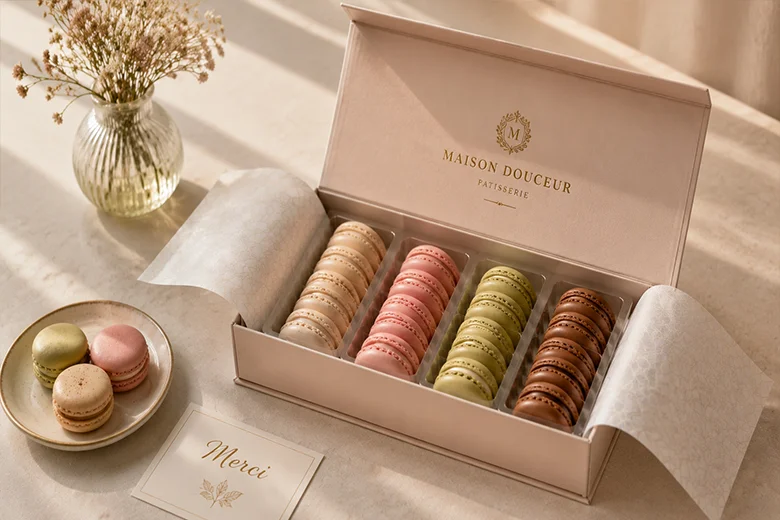
Rigid stock is a premium packaging material manufactured from thick paperboard. It provides exceptional durability and a luxurious appearance, making it suitable for high-end bakery products and special occasions where presentation matters as much as protection.
Example: Luxury macaron boxes, wedding cake boxes, chocolate pastry boxes, and gift dessert boxes often use rigid stock. A magnetic rigid macaron box creates an elegant unboxing experience for customers purchasing gourmet treats as gifts.
Plastic
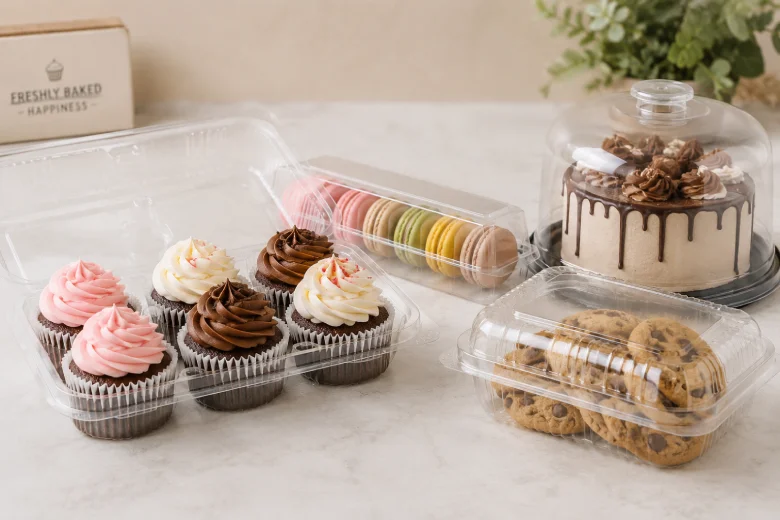
Plastic packaging offers excellent visibility and moisture resistance, allowing customers to see bakery products before purchasing. Food-grade plastic containers also help preserve freshness while protecting delicate decorations from dust, spills, and handling.
Example: Plastic cupcake containers, macaron trays, cake domes, and cookie clamshell boxes are commonly used in bakeries. A clear plastic cupcake container showcases decorated cupcakes while preventing frosting from getting damaged.
Tin
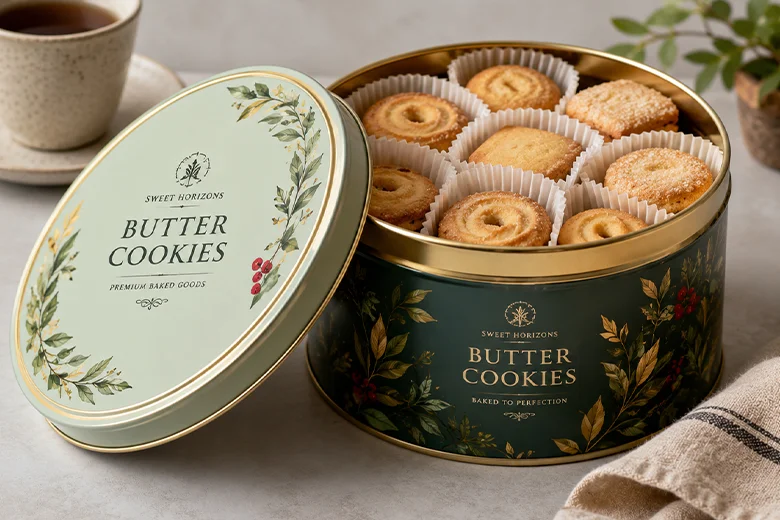
Tin packaging is durable, reusable, and highly resistant to moisture and external damage. It is commonly used for premium baked goods that require a longer shelf life or attractive gift packaging during holidays and special occasions.
Example: Decorative cookie tins, biscuit tins, shortbread tins, and holiday treat tins keep baked products fresh for extended periods. A printed cookie tin protects butter cookies while providing attractive gift packaging customers can reuse.
Aluminum
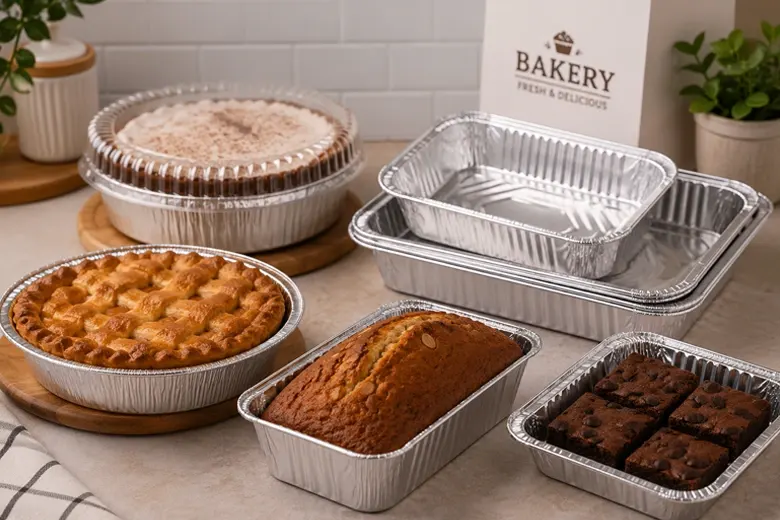
Aluminum is a lightweight and heat-resistant material that performs well in baking, storing, and transporting food. It helps maintain product quality and is widely used for bakery items that are baked and served in the same container.
Example: Aluminum pie pans, cake trays, brownie trays, and loaf cake containers are common in commercial bakeries. An aluminum loaf pan allows fresh bread to be baked, stored, and transported without changing containers.
Glass
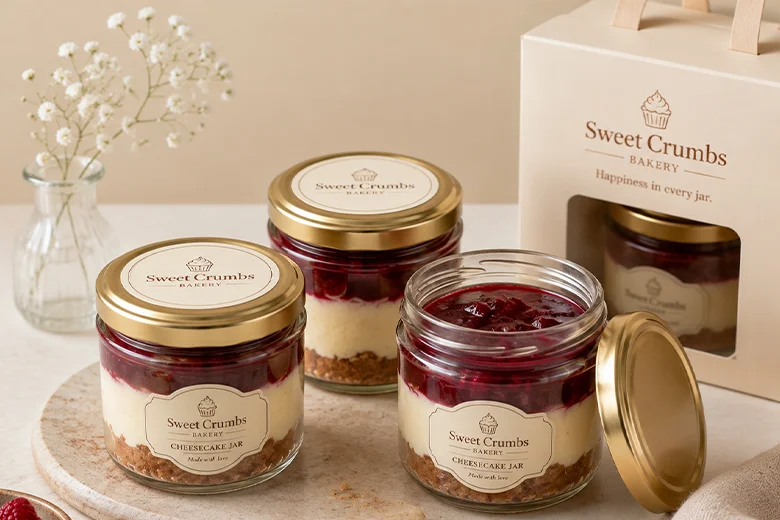
Glass packaging offers excellent food safety, premium presentation, and airtight storage. It does not absorb odors or flavors, making it suitable for bakery products that require freshness and an upscale appearance for retail display.
Example: Glass dessert jars, cheesecake jars, tiramisu jars, and pudding containers are increasingly popular. A glass dessert jar keeps layered cheesecake fresh while presenting the product beautifully for cafés, bakeries, and takeaway dessert shops.
| Material Type | Key Characteristics & Benefits | Ideal Bakery Applications | Specific Examples |
| Kraft Paperboard | • Lightweight, natural wood pulp • Recyclable & biodegradable • Eco-friendly, rustic appearance | Artisan baked goods not requiring heavy structural protection | Macaron boxes (with clear windows), pastry boxes, donut boxes |
| Cardboard | • Cost-effective & lightweight • High printability for custom branding • Accepts custom coatings & finishes | Everyday bakery items sold in-store or for local takeaway | Custom cake boxes, cupcake boxes (with inserts), muffin boxes, pie boxes |
| Corrugated Cardboard | • Fluted internal layers for high strength • Excellent cushioning & crush resistance • Superior durability for transit | Multi-tiered cakes, long-distance shipping, bulk orders | Corrugated cake shipping boxes, bakery mailer boxes, dessert subscription boxes |
| Rigid Stock | • Premium thick paperboard • Exceptional structural integrity • High-end, luxury unboxing experience | Luxury gifts, wedding cakes, upscale specialty bakeries | Magnetic rigid macaron boxes, luxury wedding cake boxes, chocolate pastry gift boxes |
| Plastic | • Clear product visibility • High moisture & dust resistance • Protects intricate frosting/decorations | Retail displays, takeaway items with delicate toppings | Clear cupcake containers, macaron trays, cake domes, cookie clamshell boxes |
| Tin | • Reusable, sturdy, & airtight • Strong barrier against moisture & air • Extends shelf life | Premium baked goods, seasonal gifts, long-life cookies | Decorative cookie tins, shortbread tins, holiday treat tins, biscuit containers |
| Aluminum | • Heat-resistant & lightweight • Direct bake-and-serve capability • Preserves freshness during transit | Commercial baking, oven-to-table products, hot pastries | Aluminum pie pans, cake trays, brownie trays, loaf cake containers |
| Glass | • Non-porous (doesn’t absorb odors/flavors) • Airtight & food-safe • High-end visual display for layered desserts | Layered desserts, single-serve gourmet treats, café displays | Glass dessert jars, cheesecake jars, tiramisu jars, pudding containers |
How to Select The Best Packaging Material For Bakery Box Packaging?
As mentioned above, there are various bakery packaging materials, and the best one depends on the product you want to store in them.
However, when selecting the material for your bakery box packaging, there are various things you have to consider:
Structural Integrity
If protecting your bakery products is your top priority, corrugated cardboard is the best option. Its fluted layers provide extra cushioning and strength, making it ideal for heavy cakes, large pastry orders, and bakery deliveries that require maximum protection during transit.
Cost-Effectiveness
For bakeries looking to balance quality and budget, cardboard is the most practical choice. It is affordable, durable, and versatile enough for everyday packaging, making it perfect for cupcake boxes, pastry boxes, cookie boxes, and standard cake boxes.
Sustainability
When eco-friendly packaging matters most, kraft paperboard stands out. It is recyclable, biodegradable, and made from natural fibers, making it an excellent choice for bakeries that want to reduce waste while appealing to environmentally conscious customers.
Customer Experience
If your goal is to leave a lasting impression, rigid stock is worth the investment. Its premium feel, sturdy construction, and luxurious appearance make it the preferred material for gift-ready macaron boxes, gourmet dessert boxes, and celebration cake packaging.
Customizability
When flexibility is important, cardboard, kraft stock, corrugated cardboard, and rigid stock offer the most customization options. These materials can be transformed into almost any box style, shape, or size and easily accommodate windows, inserts, handles, and other features that enhance bakery packaging.
Printing Options
For vibrant branding and eye-catching designs, cardboard delivers the best results. Its smooth surface produces sharp graphics and rich colors while supporting premium finishes like foil stamping, embossing, spot UV, and matte or gloss lamination for a professional look.
Want Experts’ Recommendation For Choosing Bakery Packaging Materials?
If you are still confused about which packaging material to choose for your bakery box, it’s advisable to consult with a team of packaging experts. At Pack Legacy, our team of experts can recommend the best packaging material for your bakery box.
Pack Legacy offers a vast range of durable and sustainable packaging materials for bakery boxes, such as cardboard, kraft paper, rigid stock, corrugated cardboard, and BoPET. So if you are looking for your packaging to be made by an expert while ensuring structural integrity, you are at the right place.
Contact us today to get your bakery packaging boxes made from durable materials at wholesale rates.