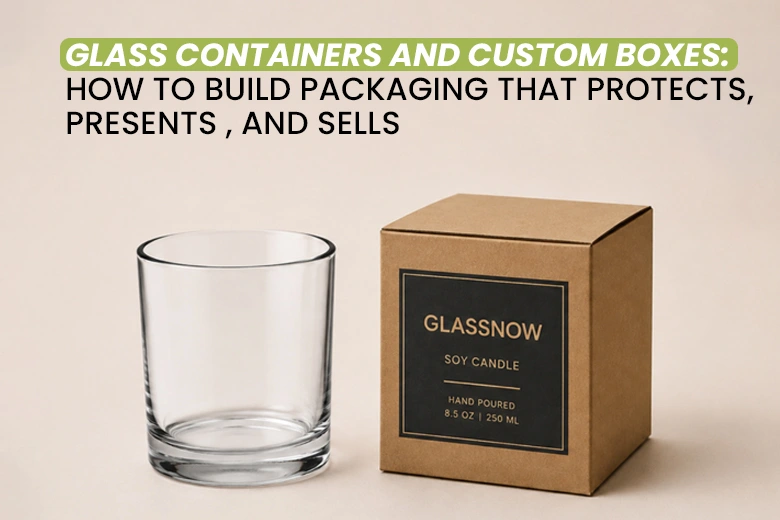
Packaging is one of the first things customers notice, but it is also one of the most important parts of protecting the product inside. For brands that use glass jars, bottles, or candle containers, the relationship between the container and the outer box matters even more.
Glass packaging can create a premium look, support a stronger shelf presence, and help customers see the value of the product before they ever use it. But because glass is heavier and more fragile than many other packaging materials, it also requires thoughtful planning. The box, insert, filler, and overall structure should be built around the glass container itself.
When glass containers and custom boxes are planned together, brands can create packaging that protects the product, improves presentation, and supports a more consistent customer experience across retail and e-commerce channels.
Why Glass Containers and Custom Boxes Should Be Planned Together
A custom box is only as effective as its fit. If the box is too large, the glass container may shift during shipping or handling. If it is too tight, the product may be difficult to remove or more likely to experience pressure-related damage. The best packaging systems start with the primary container and then build the outer packaging around its size, shape, weight, and use.
Before designing a custom box, brands should consider:
- The height and width of the glass container
- The weight of the filled product
- The shape of the jar or bottle
- Whether the product includes a lid, closure, dropper, or pump
- How the item will be displayed in retail
- Whether the package will be shipped directly to customers
- Whether inserts or dividers are needed for added protection
Choosing the right glass container early in the process helps brands create custom boxes that fit securely, present beautifully, and support a more polished finished product. Brands exploring glass packaging options can browse wholesale glass containers from Glassnow here.
Packaging Protection Starts With the Container
Custom boxes play an important role in protecting glass products, but protection begins with the container itself. A glass jar or bottle should be appropriate for the product category, fill weight, closure, and handling requirements.
For example, a candle brand needs to consider the vessel’s wall thickness, heat compatibility, lid fit, and overall stability. A skincare brand may need to think about pump compatibility, label space, and how the bottle will be handled during daily use. A gourmet food brand may need a container that supports product freshness, clear visibility, and secure closure.
Once the container is selected, the box can be designed to support it properly. This helps reduce movement, prevent scratches, and create a better presentation when the customer opens the package.
Use Box Dimensions That Match the Actual Product
Accurate measurements are essential when packaging glass products. A box should be designed around the final filled product, not just the empty container. Once a jar, bottle, or candle vessel is filled, labeled, and closed, the final dimensions and weight may change.
Brands should measure the product after all packaging elements are in place, including:
- Labels
- Lids
- Pumps
- Droppers
- Caps
- Shrink bands
- Decorative elements
- Protective wraps
This ensures the custom box dimensions are based on the actual size of the finished product, not just the container alone. When measuring for a custom box, be sure to account for the product’s final height, width, and depth after labels, closures, protective wraps, and other packaging elements have been added.
A properly sized box allows enough room for protection while minimizing excess space that can lead to movement during shipping. The right fit can help reduce damage, improve presentation, and create a more professional unboxing experience.
Add Inserts for Stability and Presentation
Box inserts are especially useful for glass packaging because they help hold the container in place. Inserts can prevent the product from shifting inside the box and can also make the packaging look more polished.
Common insert options include:
- Cardboard inserts
- Corrugated inserts
- Molded pulp inserts
- Foam inserts
- Dividers for multi-product sets
For retail packaging, inserts can help position the product neatly inside the box. For e-commerce packaging, they can provide an added layer of protection during transit. For gift sets or product bundles, inserts can keep multiple items organized and visually appealing.
The right insert depends on the product’s weight, shape, and fragility, as well as the brand’s presentation goals.
Match the Box Style to the Sales Channel
Not every glass product needs the same type of custom box. A package designed for retail shelves may have different priorities than one designed for direct-to-consumer shipping.
For retail, packaging should focus on presentation, shelf presence, and brand communication. A candle, skincare bottle, or gourmet food jar may benefit from a custom printed box that includes product details, scent or flavor information, usage instructions, and brand messaging.
For e-commerce, packaging should focus more heavily on protection. The box needs to withstand handling, stacking, and movement during shipping. This may require stronger corrugated materials, added cushioning, or inserts that keep the glass container stable.
For subscription boxes or gift sets, packaging should balance both needs. The product needs to arrive safely, but the opening experience also needs to feel intentional and memorable.
Think About Brand Consistency Across Product Lines
Many brands sell more than one product size, scent, formula, or flavor. In these cases, packaging consistency becomes especially important. When glass containers and custom boxes are planned together, brands can create a cohesive product line that feels organized and professional.
For example, a candle brand may use the same vessel style across several scents, with box colors or labels changing by fragrance. A skincare brand may use matching glass bottles and jars for serums, creams, and oils. A gourmet food brand may use coordinated glass jars for sauces, spices, honey, or preserves.
This kind of consistency can make products easier to merchandise, easier to recognize, and easier for customers to trust. It can also help brands streamline custom box production because packaging dimensions and design systems are more predictable.
Use Packaging to Communicate Product Value
Glass packaging often gives products a premium feel, but the outer box should reinforce that value. A well-designed custom box can help communicate quality, care, and professionalism before the customer sees the product inside.
Brands can use custom boxes to highlight:
- Product ingredients or materials
- Scent, flavor, or formula details
- Usage instructions
- Sustainability messaging
- Brand story
- Safety information
- Product benefits
The goal is not only to make the product look attractive. The goal is to help customers understand what makes the product worth buying.
Balance Sustainability, Durability, and Design
Many brands choose glass because it can support a more elevated and sustainability-focused packaging strategy. Custom boxes can strengthen that message when they are designed with thoughtful materials, efficient sizing, and responsible production choices.
Oversized boxes can create unnecessary waste and increase shipping costs. Weak boxes may lead to breakage, replacements, and customer frustration. The strongest packaging strategies balance durability, presentation, and material efficiency.
Brands should consider packaging materials that fit the product’s needs while still aligning with the company’s values. This may include recyclable paperboard, corrugated materials, kraft finishes, molded pulp inserts, or other options that support both protection and presentation.
Test Packaging Before Scaling
Before launching a new product or scaling fulfillment, brands should test how the glass container and custom box perform together. This is especially important for products that will be shipped directly to customers.
A packaging test may include:
- Checking whether the product shifts inside the box
- Testing different insert or filler options
- Reviewing how the box looks after shipping
- Confirming that labels and glass surfaces stay protected
- Evaluating the customer unboxing experience
- Making sure the packaging fits efficiently into shipping cartons
Testing helps brands identify issues before they become expensive problems. It can also help reduce product damage, returns, and negative customer experiences.
Final Thoughts
Glass containers and custom boxes work best when they are designed as one complete packaging system. The glass container creates the foundation for the product’s look, feel, and function, while the custom box adds protection, structure, and brand communication.
By choosing the right container early, using accurate dimensions, adding proper inserts, and matching the box to the sales channel, brands can create packaging that does more than hold a product. It can protect product quality, strengthen shelf presence, improve the customer experience, and support long-term brand trust.
For brands using glass jars, bottles, or candle containers, thoughtful packaging is not just a finishing touch. It is an important part of how the product is protected, presented, and remembered.