
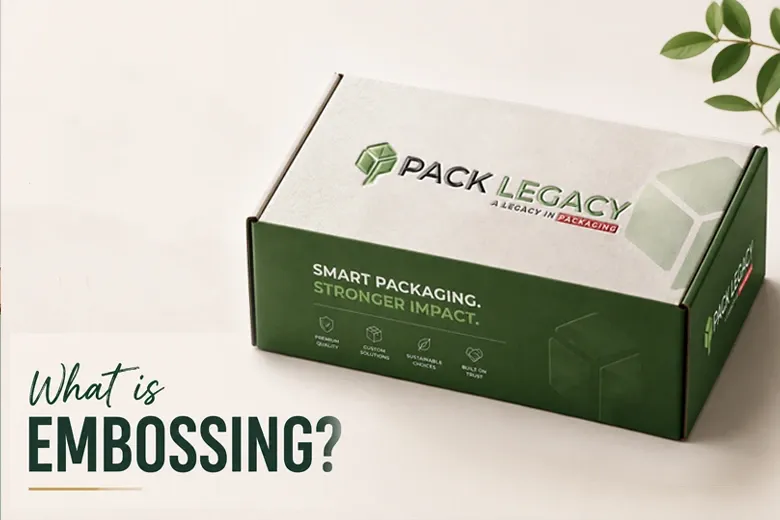
Embossing is a technique that raises a specific part of your artwork, adding a raised texture to the touch and making it more prominent. It creates a three-dimensional, raised effect on the selected areas of the artwork.
You have probably seen this technique in your life, done on various items, including business cards, books, and more. If you have ever run your hand over a topographical globe, you’ll feel its bumps and recesses; its raised surface feels comfortable. Embossing creates a similar effect.
This blog post will cover all aspects of embossing, including its procedure, advantages, and differences from debossing.
The Process of Embossing
Embossing involves multiple steps to produce the effect on the printing material. A printing company uses two main tools to create this effect: a die and a press.
Before I explain the embossing process, let’s take a closer look at how an embossing die is made.
Creating a die involves two metal plates, one for the front and one for the back (also called counterdies), that sandwich the paper to create the effect.
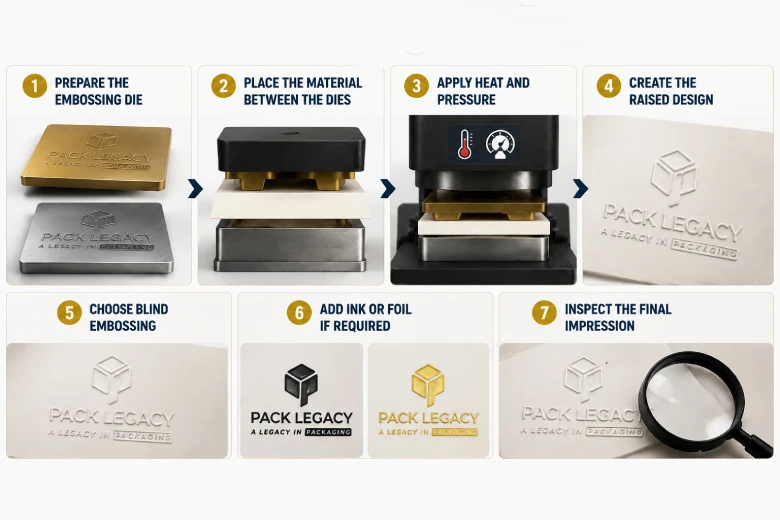
The following steps are involved in the process of embossing:
- Prepare the Embossing Die: The printer prepares a male and female die based on the artwork, logo, or design you want to emboss.
- Place the Material Between the Dies: The paper or packaging stock is positioned between both dies. For embossing, the female die stays on top while the male die works as the counterdie underneath.
- Apply Heat and Pressure: The machine applies controlled heat and pressure. This pushes the material into the die and creates a raised impression on the surface.
- Create the Raised Design: Once pressed, the selected logo, text, or artwork becomes raised above the surrounding surface. This is known as embossing.
- Choose Blind Embossing: If you add no ink or foil, the process is called blind embossing. The design relies only on the raised texture for its appearance.
- Add Ink or Foil if Required: You can also combine embossing with ink or metallic foil. This is commonly called registered embossing or combination embossing.
- Inspect the Final Impression: Check the finished material for proper depth, alignment, and clarity to ensure the embossed design looks clean and consistent.
Difference Between Embossing & Debossing
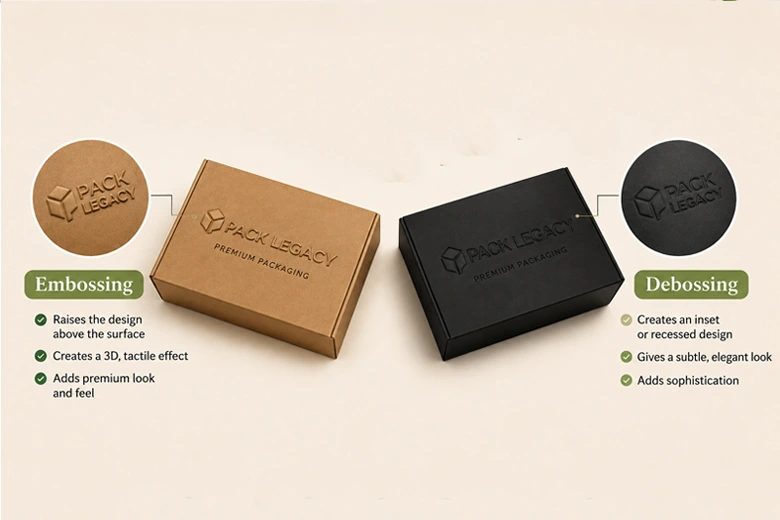
Embossing and debossing are two sides of the same coin. Embossing raises the printed area above the surface, while debossing presses the design inward to create a recessed effect.
Here are the differences between embossing & debossing:
| Feature | Embossing | Debossing |
| Effect | Creates a raised design above the surface. | Creates a pressed or recessed design into the surface. |
| Appearance | Makes logos, text, or patterns stand out. | Gives logos, text, or patterns an engraved appearance. |
| Die Position | The male die pushes the material upward into the female die. | The male die presses the material downward into the female die. |
| Texture | Produces a noticeable raised texture. | Produces a deep, indented texture. |
| Best For | Logos, brand names, patterns, and premium packaging. | Minimal logos, typography, and subtle packaging designs. |
| Ink or Foil | Can be combined with ink or foil stamping. | Can also be combined with ink or foil for added detail. |
| Overall Look | Bold, prominent, and premium. | Subtle, elegant, and sophisticated. |
Benefits of Using Embossing
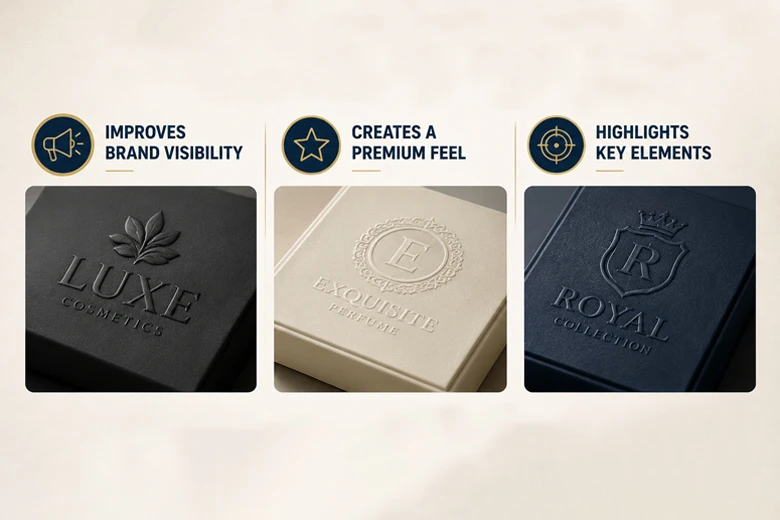
Embossing adds texture and depth to packaging, helping important design elements stand out while creating a more premium customer experience.
- Improves Brand Visibility: Raised logos and graphics catch attention, making packaging memorable and helping customers recognize your brand easily and quickly.
- Creates a Premium Feel: Embossed details add a tactile finish that makes custom boxes feel more refined, professional, and valuable.
- Highlights Key Elements: Embossing draws attention to logos, product names, patterns, or artwork without relying entirely on additional printed colors alone.
By using embossing, brands can improve presentation, strengthen identity, and give packaging a premium finish customers can see and feel.
Conclusion:
Embossing is a practical finishing technique that adds texture, depth, and visual interest to printed materials and packaging. By raising selected design elements, it helps logos, text, and artwork stand out while creating a premium feel. Whether used alone or with ink and foil, embossing gives brands another effective way to improve presentation and strengthen overall packaging appeal for customers.