
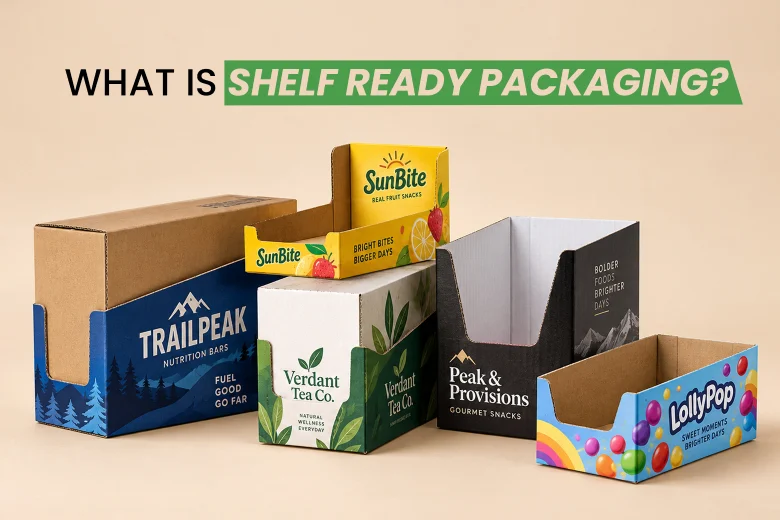
Retail shelves are the battleground where products fight for attention. Packaging is no longer just about protection—it’s about presentation, speed, and impact. That’s where Shelf Ready Packaging (SRP) comes in.
SRP is more than a box. It’s a system that moves products seamlessly from warehouse to shelf, saving time, reducing costs, and boosting sales. In this blog, we’ll explore SRP in detail—covering design, benefits, sustainability, innovations, and implementation.
Let’s get started.
What Is Shelf Ready Packaging? A Brief Intro
Shelf Ready Packaging (SRP), also called Retail Ready Packaging (RRP), is packaging designed to go straight onto retail shelves without unpacking. It combines transit strength with display appeal. Unlike traditional cartons, SRP is perforated or designed to open easily, revealing products instantly.
SRP emerged in the 1980s as supermarkets sought faster restocking. Today, it’s a global standard. Retailers like Walmart, Tesco, and Carrefour demand SRP compliance.
SRP’s evolution mirrors retail logistics. Early SRPs were crude tear‑away boxes. Modern SRP integrates CAD (Computer‑Aided Design), pallet optimization, and even digital printing.
In short, SRP is not just packaging—it’s a retail strategy.
Key Characteristics of Shelf Ready Packaging: The “Five Easies”
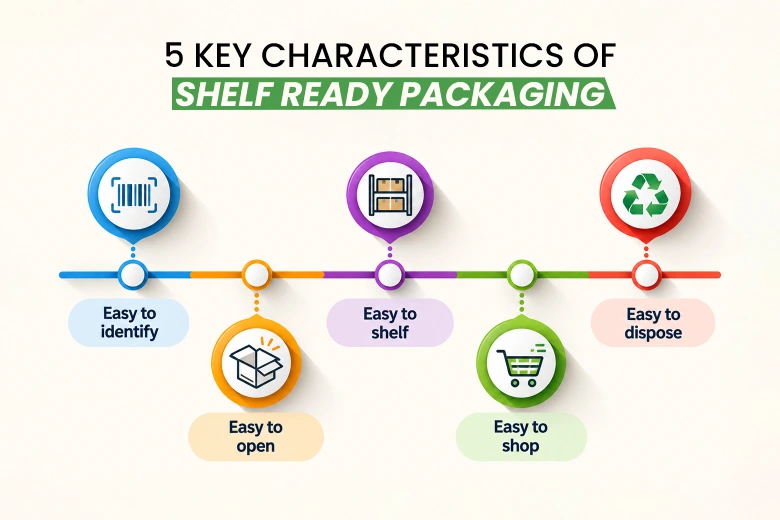
Retailers evaluate SRP using five universal criteria.
- Easy to identify: Clear labeling, barcodes, and graphics for quick shelf placement.
- Easy to open: Clean perforations or tear strips; no box cutters needed.
- Easy to shelf: Fits standard bay sizes and allows fast stocking.
- Easy to shop: Good product visibility and accessibility for customers.
- Easy to dispose: Breaks down quickly for recycling or waste streams.
The “Five Easies” aren’t just retailer rules—they’re design principles that shape consumer experience. A package that’s easy to shop is also easier to sell.
Materials Used in Shelf Ready Packaging
The strength and appeal of SRP depend on the materials you choose. Shelf Ready Packaging can be produced from corrugated, kraft, or rigid stock, and many brands enhance these designs with customized boxes to achieve both durability and strong shelf appeal.
Let’s break it down.
| Material | Key Properties | Ideal Products | Sustainability Rating |
| Corrugated Cardboard | Strong, lightweight, cost‑effective; available in multiple flute grades | Food, beverages, bulk goods | Highly recyclable |
| Paperboard | Smooth surface for high‑quality printing; less rigid but excellent for branding | Cosmetics, pharmaceuticals, retail items | Recyclable, moderate |
| Kraft | Natural brown finish, eco‑friendly look; durable and rustic | Organic foods, eco‑friendly brands, rustic lines | Biodegradable, recyclable |
| Rigid Stock | Thick, durable, premium feel; adds luxury appeal | Electronics, high‑end cosmetics, gift sets | Reusable |
Why Retailers Use SRP?
Retailers demand SRP for efficiency and presentation.
Major retailers such as Walmart, Target, and Costco insist on Shelf Ready Packaging because it delivers clear operational advantages.
- Faster shelf replenishment: What once took several minutes can now be completed in under sixty seconds, keeping aisles stocked and reducing downtime.
- Lower staffing expenses: By streamlining the stocking process, SRP helps cut labor requirements by roughly one‑third to one‑half.
- Better product presentation: Items arrive shelf‑ready, ensuring neat displays, stronger visibility, and a more appealing shopping experience.
SRP also reduces shrinkage, meaning products stay protected during stocking and reduce damage and theft.
Overall, for retailers, SRP saves costs and boosts sales.
Benefits of Shelf Ready Packaging for Brands
SRP isn’t just for retailers—it’s a powerful tool for brands.
Shelf Ready Packaging transforms how products are seen and sold. It’s not only about logistics; it’s about branding, visibility, and consumer psychology.
- Stronger Branding
Full‑color graphics, logos, and slogans are displayed right at the point of sale. This reinforces brand identity without extra marketing spend.
- Consistent Presentation
Every in-store display presents products in the same way. This uniformity builds trust and recognition across multiple retail chains.
- Impulse Buying Boost
Studies show SRP can increase impulse purchases by 18–35%. Shoppers are more likely to grab products that are easy to see and access.
- Retailer Preference
Brands using SRP often gain smoother entry into large chains like Walmart, because compliance makes them a “preferred supplier.”
- Sustainability Reputation
Eco‑friendly SRP aligns with consumer demand for greener brands. Using recyclable materials enhances brand image.
The best part? SRP is now being used as a data collection tool. QR codes on SRP allow brands to track shopper engagement, gather analytics, and even run loyalty campaigns directly from the shelf.
Common SRP Types
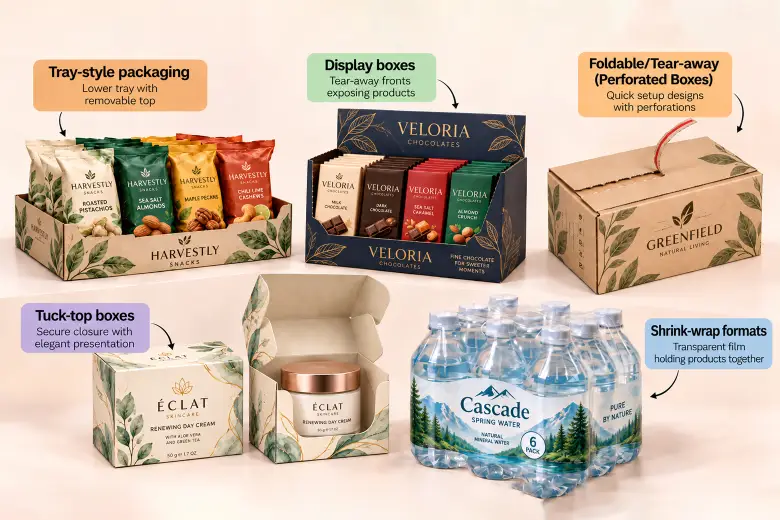
SRP comes in multiple formats, each suited to specific products.
Let’s have a look at the common SRP types.
| SRP Type | Description | Ideal Products | Why It Works |
| Tray‑style packaging | Lower tray with removable top | Snacks, biscuits, canned goods | Easy tear‑away tops reveal neatly stacked products; perfect for grab‑and‑go items |
| Display boxes | Tear‑away fronts exposing products | Chocolates, cereals, beverages | Creates instant shelf displays with strong branding visibility |
| Foldable/Tear‑away (Perforated Boxes) | Quick setup designs with perforations | Frozen foods, multipacks, promotional kits | Fast to open, easy to dispose, ideal for seasonal or bundled products |
| Tuck‑top boxes | Secure closure with elegant presentation | Cosmetics, premium teas, small electronics | Adds premium feel while keeping products safe and accessible |
| Shrink‑wrap formats | Transparent film holding products together | Bottled water, soft drinks, multipack items | Provides visibility while keeping products tightly packed and easy to transport |
Choosing the right SRP type depends on both product category and shopper behavior. For example, cosmetics benefit from premium tuck‑top designs that highlight luxury, while snack foods thrive in tray‑style SRP that encourages quick grabs.
CAD and Planogram Compliance for Shelf Ready Packaging
Behind every successful SRP is precision engineering and strict retail rules.
CAD (Computer‑Aided Design)
CAD is the backbone of modern packaging design. Packaging engineers use CAD software to create digital SRP models before production. These models define:
- Exact dimensions of trays, tear‑away fronts, and lids.
- Material strength (flute grades in corrugated board).
- Folding and perforation performance.
- Pallet optimization for transport efficiency.
CAD allows brands to simulate how SRP will behave on shelves and pallets. This reduces costly trial‑and‑error and ensures compliance with retailer standards before a single box is printed.
Planogram Compliance
A planogram is a retailer’s shelf layout blueprint.
It dictates:
- Shelf width, depth, and height limits.
- Number of facings (visible product units).
- Barcode placement for quick scanning.
- Product arrangement for consistency across stores.
Note: Non‑compliant SRP can be rejected outright. For example, a brand might lose shelf space because its SRP exceeded pallet footprint by just 2 cm. That small error cost millions in lost sales.
CAD ensures that your packaging is engineered correctly, while planogram compliance ensures it earns its place on the shelf. Together, they make SRP both practical and profitable.
Industries Using Shelf Ready Packaging
SRP is used across industries, each with unique needs.
- Food & Beverage
SRP ensures freshness, visibility, and quick restocking for snacks, cereals, chocolates, and canned goods.
- Cosmetics & Beauty
highlights branding and creates a luxury shelf presence of skincare kits, makeup sets, and premium lotions.
- Pharmaceuticals
SRP ensures safety, clear labeling, and easy disposal of blister packs and over‑the‑counter medicines.
- Stationery & Retail Accessories
SRP organizes small items like pens, notebooks, and office supplies neatly for impulse purchases.
- CBD & Wellness
SRP ensures labeling compliance and easy access to CBD products.
- Quick Commerce (Q‑commerce)
SRP supports speed, efficiency, and compact storage for products for 10‑minute delivery startups.
Shelf Ready Packaging adapts to industry trends. In Q‑commerce, it is designed for ultra‑fast delivery, meaning packaging doubles as both transport and display.
Sustainability in SRP
Eco‑friendly packaging is no longer optional. The good thing is that Shelf Ready Packaging uses recyclable, biodegradable, and FSC‑certified materials. It also reduces shrink and waste.
Moreover, it lowers carbon footprint by reducing backroom handling. Less energy use means greener operations.
Cost & Wholesale Considerations
SRP saves money in more ways than one. Labor savings range from 30–50%, and wholesale pricing models make SRP affordable at scale. This packaging acts as a hidden marketing budget saver. Brands shift spend from in‑store displays to SRP printing, reducing promotional costs.
Innovations in Shelf Ready Packaging
SRP now integrates NFC, RFID, and QR codes. Also worth mentioning is digital printing that allows personalization.
Plus, AI‑driven SRP design predicts shelf performance before rollout. This means your business can test virtually, saving time and money.
Five Easy Steps to Implement Shelf Ready Packaging
Ready to adopt Shelf Ready Packaging?
Here are the 5 easy steps to follow:
- Audit your current packaging: Identify which SKUs need SRP.
- Consult retailer guidelines: Each chain has unique requirements.
- Work with packaging professionals: Align CAD design with pallet and shelf dimensions.
- Test prototypes in real stores: Check tear‑away performance and shopper appeal.
- Scale production sustainably: Use eco‑friendly materials and digital printing.
With these five steps, SRP becomes simple, scalable, and profitable.
The Takeaway
No doubt, Shelf Ready Packaging is more than packaging—it’s retail strategy. From efficiency to branding, sustainability to innovation, SRP transforms how products reach shelves. It saves time, reduces costs, and boosts sales.
For retailers, SRP means faster replenishment, reduced labor costs, and consistent shelf presentation. For brands, it delivers stronger in-store branding, impulse-purchase uplift, and alignment with sustainability goals.
Overall, Shelf Ready Packaging is not just an option—it’s a necessity.
FAQs
What is Shelf Ready Packaging?
Shelf Ready Packaging (SRP) is packaging designed to go directly onto retail shelves without unpacking. It combines transport strength with display appeal, making products easier to stock, shop, and dispose of.
Why do retailers require SRP?
Retailers use SRP because it speeds up restocking, reduces labor costs, and ensures consistent shelf presentation.
What are the “Five Easies” in SRP?
The Five Easies are: Easy to identify, Easy to open, Easy to shelf, Easy to shop, and Easy to dispose. These criteria guide SRP design and retailer acceptance.
How does SRP benefit brands?
Brands that use SRP gain stronger in‑store visibility, consistent product presentation, and higher impulse sales. SRP also supports sustainability goals and enhances brand reputation.