
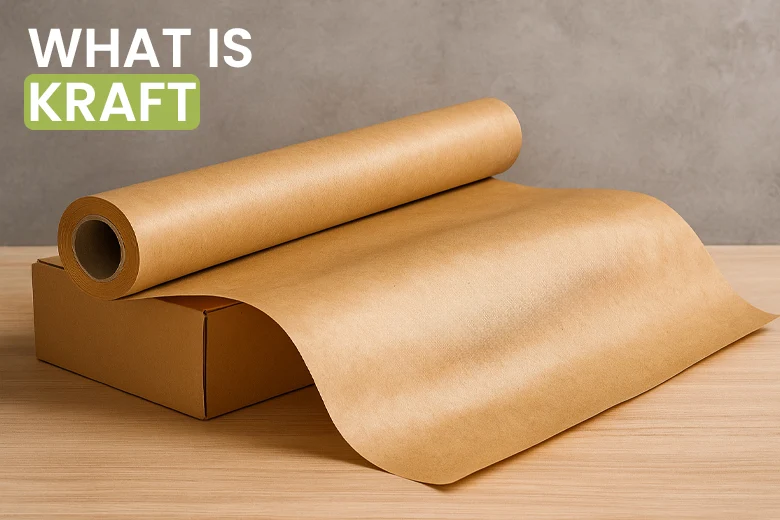

Product packaging has evolved from a simple protective layer into a strategic brand tool. In an eco-conscious marketplace, buyers demand packaging that is sustainable, versatile, and visually appealing. Kraft paper meets these needs. It offers strength, recyclability, and a rustic aesthetic that resonates with modern consumers.
Whether you’re a bakery owner, a luxury candle brand, or an industrial supplier, kraft paper provides solutions tailored to your niche.
Let’s explore all the details about kraft paper and why it’s becoming a preferred choice for eco-friendly packaging.
What is Kraft Paper Made of? The Origins & Composition
Kraft paper derives its name from the German word kraft, meaning “strength.” Its durability comes from the kraft pulping process, which chemically treats wood pulp to retain long fibers and deliver superior tear resistance.
The Raw Materials of Kraft Paper:
- Virgin pulp from softwood trees (pine, spruce)
- Recycled pulp for eco-conscious packaging.
The Processes:
- Chlorine-free bleaching for sustainability.
- Combination of virgin and recycled fibers for balance.
Types of Kraft Paper:
- Natural brown kraft (unbleached, rustic).
- Bleached kraft (white, smooth finish).
- Coated kraft (poly-coated, wax-coated, laminated).
What’s the Difference between Kraft Paper and Regular Paper?
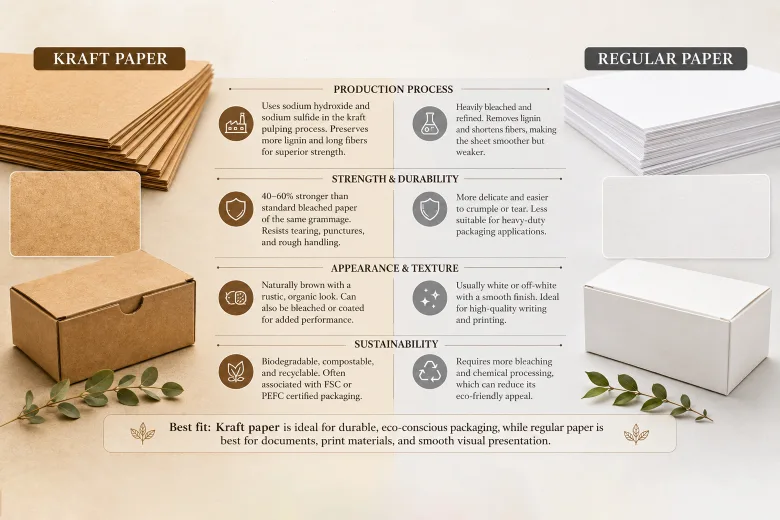
The key difference between kraft paper and regular paper lies in the pulping process and fiber strength.
Kraft paper retains more lignin and longer fibers, making it stronger, more durable, and eco‑friendly. Meanwhile, regular paper is bleached, smoother, and optimized for writing and printing but less resistant to tearing.
Here’s a detailed comparison between kraft paper and regular paper.
Production Process
Kraft Paper: Uses sodium hydroxide and sodium sulfide in the kraft pulping process. This preserves lignin and long fibers, resulting in superior strength.
Regular Paper: Heavily bleached and refined, which removes lignin and shortens fibers, making it smoother but weaker.
Strength & Durability
Kraft paper is 40–60% stronger than standard bleached paper of the same grammage. It resists tearing, punctures, and rough handling.
Regular paper is delicate, easily crumpled, and unsuitable for heavy packaging.
Appearance & Texture
Kraft paper is naturally brown because of its lignin content, giving it a rustic, eco‑friendly look. It can be bleached to white or coated for moisture resistance.
Regular paper, by contrast, is white or off‑white, smooth, and ideal for high‑quality printing.
Sustainability
Kraft paper is biodegradable, compostable, and recyclable, often certified by FSC or PEFC.
Regular paper requires more energy and chemicals due to bleaching, reducing its eco‑friendly appeal.
Kraft is the go‑to for businesses highlighting sustainability and strength, while regular paper remains essential for communication and documentation.
Kraft Paper vs Regular Paper
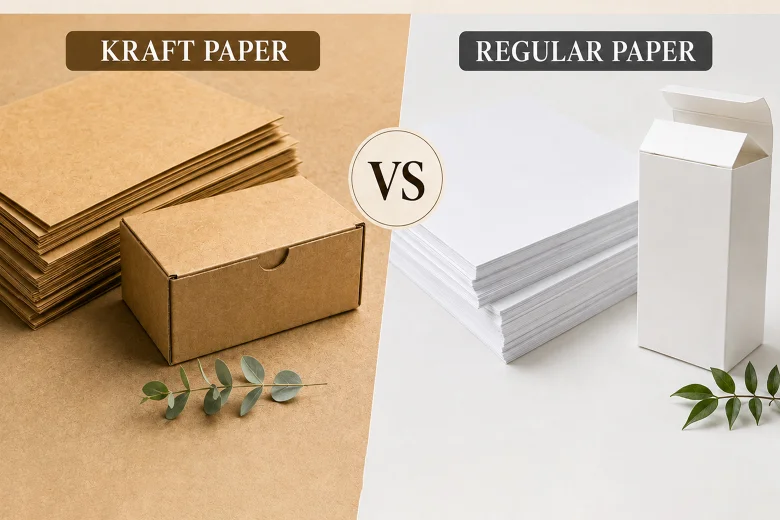
| Feature | Kraft Paper | Regular Paper |
| Production Process | Made via the kraft pulping method. | Produced with chemical pulping and bleaching. |
| Strength & Durability | High tensile strength, tear‑resistant, withstands heavy loads, ideal for packaging. | Weaker, easily crumples or tears, suitable for lightweight uses like writing and printing. |
| Appearance & Texture | Natural brown color, rougher texture; can be bleached or coated. | Smooth, white or off‑white surface, optimized for clarity and printability. |
| Sustainability | Biodegradable, recyclable up to 7 times. | Less eco‑friendly due to bleaching chemicals and shorter recycling lifespan. |
Kraft Paper: Global Market Insights
The kraft paper industry is growing rapidly, driven by sustainability and e-commerce. The market size was valued at USD 18 billion in 2025. Interestingly, it is projected to grow at a CAGR of 3.5% through 2030.
And speaking of demand, kraft paper is in high demand across countries, such as:
- Asia-Pacific: Largest consumer due to e-commerce.
- Europe: Sustainability regulations drive adoption.
- North America: Strong retail and food packaging demand.
Sustainability & Certifications of Kraft Paper
Did you know that kraft paper can be recycled up to 7 times? This material is also compostable in industrial and home settings.
Kraft paper is naturally biodegradable and meets verified sustainability standards.
Certifications:
- FSC (Forest Stewardship Council).
- PEFC (Programme for the Endorsement of Forest Certification).
Eco Standards:
- EN 13432 (EU compostability).
- ASTM D6400 (US compostability).
What is Kraft Paper Used for? Industrial & Commercial Applications
Its flexibility makes kraft paper a favorite option across industries. From heavy-duty sacks to boutique shopping bags, its adaptability is unmatched.
- Food Packaging: Bakery boxes and bags, sandwich wraps, baby food packaging. Oil-resistant laminated kraft is also used for fast food, such as burger boxes and French fry packaging.
- Retail: Candle boxes, retail packaging boxes, display boxes, grocery bags, boutique shopping bags.
- E-commerce: Mailer boxes, shipping envelopes, subscription boxes.
- Industrial Use: Cement sacks, flour bags, fertilizer packaging.
Suitable Printing & Finishing Techniques for Kraft Paper
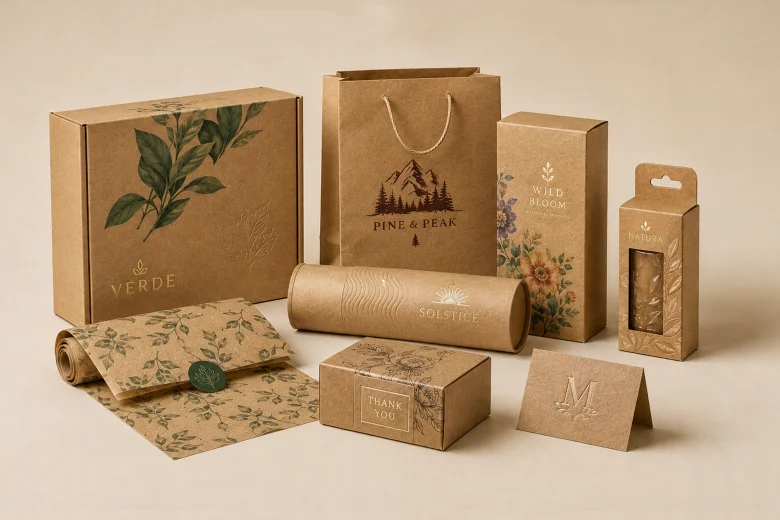
Branding is where kraft paper shines. Best of all, its surface accepts a variety of printing and finishing techniques, making it ideal for customization.
Printing Methods:
- Digital Printing: Easy to change designs, add personalization (names, QR codes, seasonal graphics).
- Flexographic Printing: Works well on rough kraft surfaces; popular for kraft bags and large production runs.
- Offset Printing: Known for precision, color accuracy, and high‑quality finishes, making it perfect for luxury kraft packaging.
- Soy-based and water-based inks for sustainability.
Finishing Options:
- Spot UV coating, aqueous coating, and varnish for protection.
- Embossing and debossing for deep texture.
- Foil stamping for luxury appeal.
All these techniques transform kraft paper from a functional material into custom printed boxes that serve as a brand’s storytelling medium.
Why Choose Kraft Paper for Packaging?
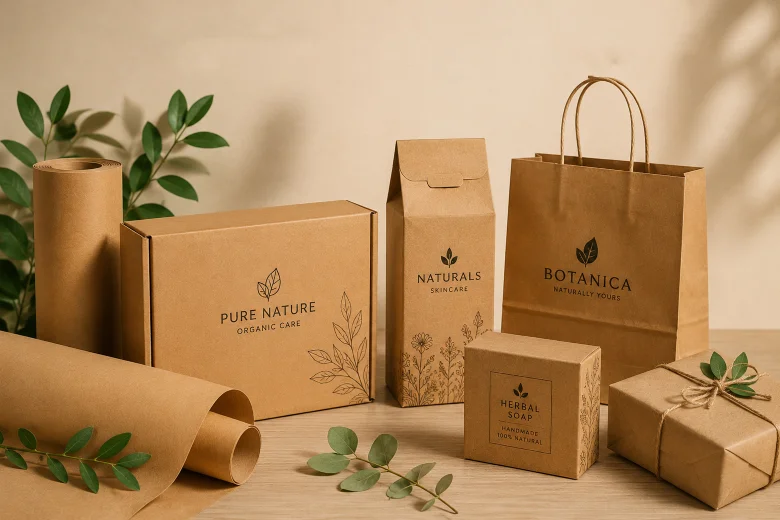
Choosing kraft paper for packaging is a strategic decision that blends strength, sustainability, and branding appeal.
Unlike regular paper or plastic alternatives, kraft paper offers tremendous benefits for your business.
Reliable Strength & Durability
Kraft paper is engineered for toughness. It is ideal for packaging that must withstand handling, shipping, and storage.
- High Tensile Strength: Resists tearing and punctures.
- A Wide Range of GSM options: From lightweight wraps to heavy-duty sacks.
- Moisture & Oil Resistance: Enhanced with coatings or laminations.
Sustainability & Eco-Friendly Branding
Consumers increasingly prefer packaging that reflects environmental responsibility. Kraft paper delivers on this expectation.
With its global certifications, kraft paper strengthens your brand’s green identity and builds trust with eco‑aware customers.
Customization & Branding Potential
As we all know, packaging is a silent salesperson, and kraft paper is highly adaptable for branding. Kraft material can be transformed into packaging boxes that elevate the customer experience.
Market & Business Advantages
The kraft paper market continues to grow globally, driven by e-commerce and sustainability regulations. When you choose kraft paper, your business can gain a competitive edge by aligning with market trends and consumer expectations.
Buyer Benefits
For buyers and businesses, kraft paper offers practical and strategic advantages, such as:
- Wholesale availability: Kraft paper comes in rolls, sheets, and bulk kraft packaging boxes.
- Custom packaging solutions: Tailored designs for brand identity.
- Luxury appeal: Premium finishes for high-end products.
- Eco-conscious marketing: It reinforces sustainability messaging.
Overall, kraft paper is the smart choice for custom packaging because it combines eco-friendliness, strength, customization, and market relevance. This material protects your products, elevates your brand, and positions you as a sustainability leader.
In Summary
Undoubtedly, kraft paper is more than a packaging material. It represents sustainability, strength, and branding flexibility. From industrial uses to luxury packaging boxes, kraft adapts to every need while keeping eco-conscious customers engaged.
With certifications like FSC and PEFC, advanced printing techniques, and global market growth, kraft paper is set to remain the gold standard of eco-friendly packaging.
FAQs
What is kraft paper made of?
Kraft paper derives its name from the German word kraft, meaning “strength.” Its durability comes from the kraft pulping process, which chemically treats wood pulp to retain long fibers and deliver superior tear resistance.
What are the types of kraft paper?
Common types of kraft paper include natural brown kraft (unbleached, rustic), bleached kraft (white, smooth finish), and coated kraft (poly-coated, wax-coated, laminated).
What’s the difference between kraft paper and regular paper?
The key difference between kraft paper and regular paper lies in the pulping process and fiber strength. Kraft paper retains more lignin and longer fibers, while regular paper is bleached, smoother, and optimized for writing and printing but less resistant to tearing.
Is kraft paper biodegradable?
Kraft paper is 100% biodegradable and compostable under EN 13432 and ASTM D6400 standards.