
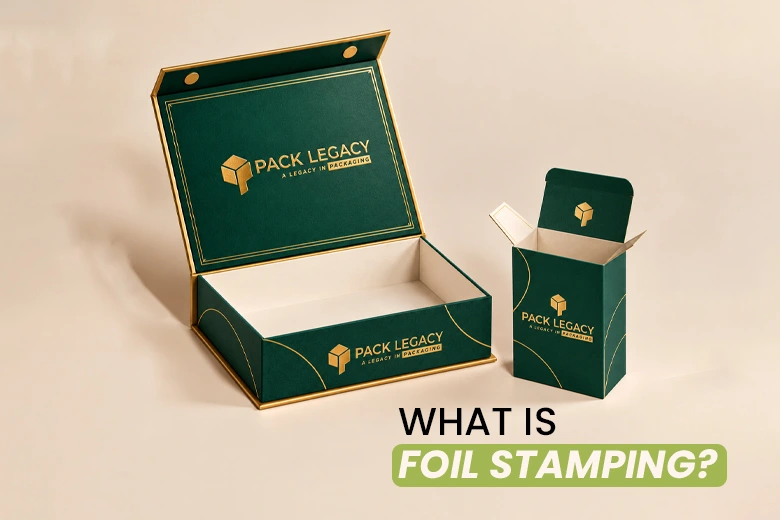
Foil stamping is a popular printing technique that adds a shiny, metallic finish to packaging. It helps brands highlight their logos, product names, and artwork with a premium look.
From luxury rigid boxes to folding cartons, foil stamping can make even a simple design stand out. But how does this printing process work, and what makes it special?
In this article, I will explain everything you need to know about foil stamping, including its process, types, benefits, and uses in custom packaging.
Why Use Foil Stamping?
Foil stamping is a special printing technique that uses heat, pressure, and metal dies to apply a thin layer of foil to packaging materials. It creates a shiny finish that helps logos, text, and artwork stand out.
This printing method has been used since the late 19th century and remains popular in premium packaging today.
Like embossing, debossing, and spot UV, foil stamping adds visual appeal and increases a product’s perceived value. It works on various paper stocks, but smooth surfaces deliver the best results.
Process of Foil Stamping
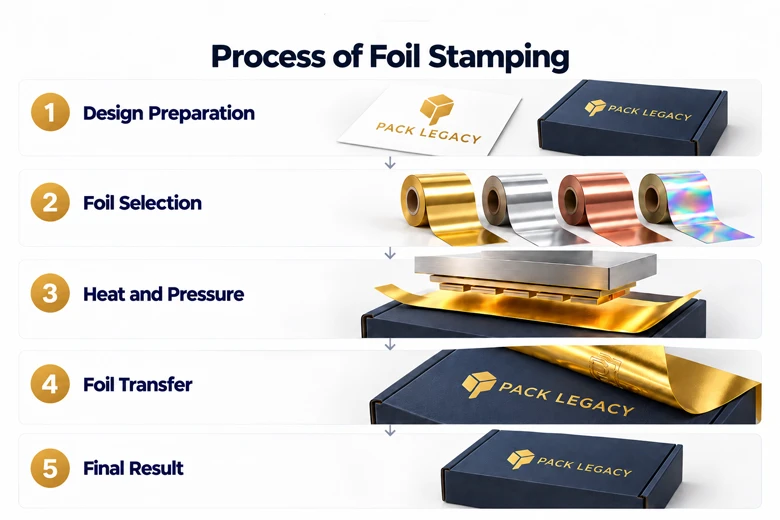
Foil stamping uses heat, pressure, and a custom metal die to transfer a thin layer of foil onto packaging materials. Unlike traditional printing, this process does not use liquid ink.
The process involves a few simple steps:
- Design Preparation: Prepare the artwork and create a metal die based on the design.
- Foil Selection: A foil color and finish are selected to match the packaging design.
- Heat and Pressure: The heated die presses the foil against the packaging surface.
- Foil Transfer: Heat activates the adhesive layer, allowing the foil to stick to the material.
- Final Result: The carrier film is removed, leaving a clean, shiny design on the packaging.
This process works well for logos, brand names, patterns, and decorative details.
Different Types of Foil Stamping
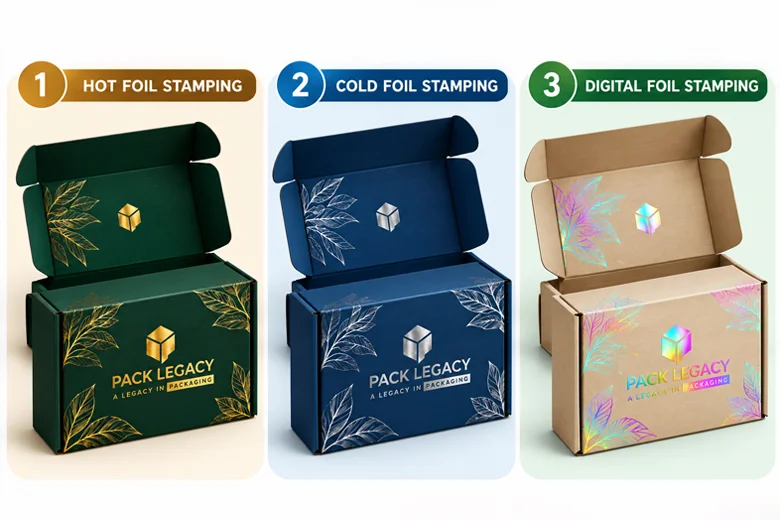
Several types of foil stamping are used in custom packaging. Each method offers a different look and works best for certain designs and materials.
1. Hot Foil Stamping
Hot foil stamping is one of the most common methods. It uses a heated metal die to transfer foil onto paperboard, cardboard, and other packaging surfaces.
It is often used for custom boxes, cosmetic packaging, and gift boxes.
2. Cold Foil Stamping
Cold foil stamping uses adhesive and pressure instead of a heated die. The foil sticks to areas where the adhesive is applied.
This method is commonly used for labels, folding cartons, and large-quantity packaging.
3. Digital Foil Stamping
Digital foil stamping applies foil without traditional metal dies. It uses digital technology to create the design and transfer the foil.
It is a useful option for short production runs, personalized packaging, and designs that change frequently.
Benefits of Foil Stamping for Custom Packaging
Foil stamping offers more than a shiny appearance. It can help brands improve product presentation and create packaging that customers notice.
Makes Your Packaging Stand Out
A shiny foil design catches light and draws attention to important details. It helps your packaging look different from ordinary printed boxes.
Adds a Premium Look
Foil stamping can make simple packaging appear more luxurious. Gold and silver foil are especially popular for high-end products.
Highlights Important Design Elements
You can use foil stamping to highlight your brand logo, product name, or special message without covering the entire box.
Offers Different Design Options
Foil stamping is available in several colors and finishes. You can combine it with embossing or debossing to create a more detailed design.
Works Across Different Industries
From cosmetics to jewelry, foil stamping is used by businesses that want attractive and professional product packaging.
Which Packaging Materials Support Foil Stamping?
Foil stamping works on many packaging materials, but the final results depend on the surface texture and coating.
| Packaging material | Suitability |
| Smooth paperboard | Excellent for detailed foil designs |
| Rigid box wrapping paper | Ideal for premium packaging |
| Coated cardstock | Provides a clean foil finish |
| Kraft paper | Works well with suitable foil and settings |
| Corrugated cardboard | Best on smooth liners or wrapped surfaces |
| Textured paper | Requires testing for consistent results |
For best results, choose a smooth, even surface. Rough materials may require special dies, foil types, or adjustments to heat and pressure.
Foil Stamping vs. Embossing vs. Spot UV
Foil stamping, embossing, and spot UV are popular finishing techniques. However, they create different effects on packaging.
| Technique | Main effect |
| Foil stamping | Adds metallic or colored foil |
| Embossing | Creates a raised design |
| Debossing | Creates a pressed-in design |
| Spot UV | Adds a glossy coating to selected areas |
You can also combine these techniques. For example, embossed foil stamping creates a raised metallic logo that customers can both see and feel.
Things to Consider Before Choosing Foil Stamping
Before adding foil stamping to your packaging, consider your design, material, and budget.
- Design Size: Small text and fine details may need special attention to prevent unclear foil transfers.
- Material Selection: Smooth surfaces usually produce better results.
- Foil Color: Choose a color that contrasts with your packaging background.
- Production Quantity: Traditional hot foil stamping requires a die, which can increase setup costs for smaller orders.
- Artwork Placement: Avoid placing important foil details too close to folds, creases, or cutting edges.
Always request a sample or proof when possible to check the foil color, placement, and overall appearance before bulk production.
Final Thoughts
Foil stamping is a great way to add shine, style, and a premium touch to custom packaging. Whether you choose gold, silver, or holographic foil, the right finish can help your product stand out.
However, the best results depend on your packaging material, artwork, and printing method.
If you want professional, attractive packaging, foil stamping is worth considering.
Frequently Asked Questions
Is foil stamping expensive?
Foil stamping can cost more than standard printing because it may require custom dies and additional production steps. The final price depends on the design, foil type, and order quantity.
Can foil stamping be applied to cardboard boxes?
Yes. Foil stamping works on many cardboard packaging materials, especially smooth paperboard and coated surfaces. Rough corrugated cardboard may require special preparation for better results.
What is the difference between gold foil and gold ink?
Gold foil creates a reflective metallic finish, while standard gold ink produces a printed color. Metallic inks can also reflect light, but they generally look different from foil.
Is foil stamping suitable for small packaging orders?
Yes. Digital foil stamping can work for smaller orders because it doesn’t require traditional metal dies. Availability and costs depend on the packaging manufacturer.
Can foil stamping be combined with embossing?
Yes. You can combine foil stamping and embossing to create raised metallic designs. This technique is often used for luxury logos and premium product packaging.