

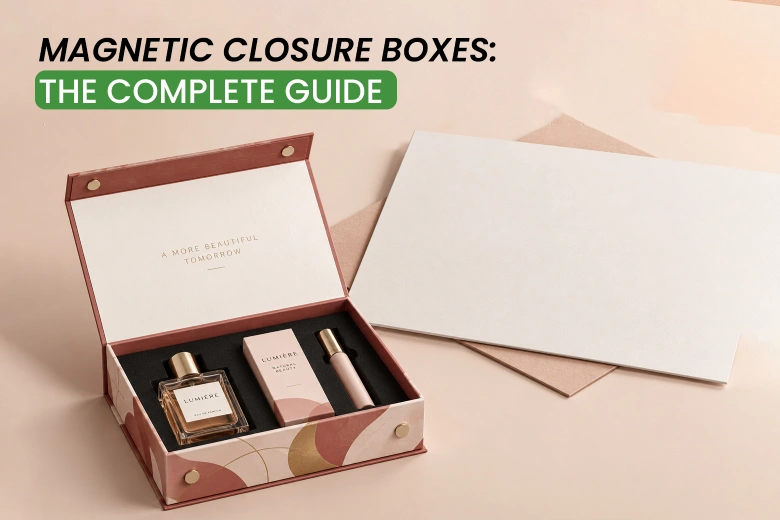
Packaging is more than product protection. It is presentation, branding, and buyer experience. Magnetic closure boxes deliver all three. The satisfying snap of the magnet signals quality. It reassures buyers that the product inside is secure.
This guide explores every angle: types, materials, design, uses, comparisons, and customization. By the end, you’ll know how magnetic boxes elevate brands and why they dominate premium packaging.
What are Magnetic Closure Boxes?
Magnetic closure boxes are rigid or foldable packaging solutions. They use hidden magnets embedded in the flap or lid. These magnets snap shut with precision. The closure feels smooth, premium, and reliable.
They are popular in luxury retail, cosmetics, electronics, gifting, and subscription boxes. Just like other types of rigid boxes, magnetic closure boxes appeal for their durability, elegance, and memorable unboxing.
Types of Magnetic Closure Boxes
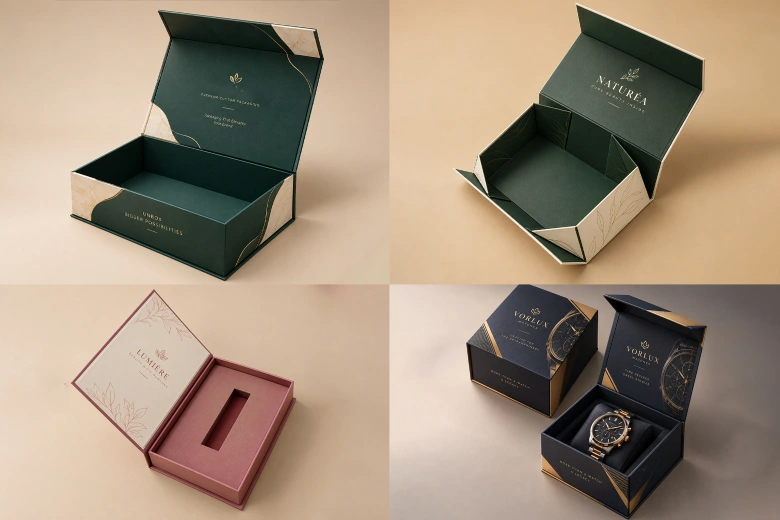
Magnetic closure boxes are defined by their hidden magnets.
Here are the main types.
- Rigid Magnetic Closure Boxes: Made from thick chipboard. Non‑collapsible and deliver a premium feel. They are common for jewelry, perfumes, and electronics.
- Foldable Magnetic Closure Boxes: Collapsible design that ships flat and saves storage. They are eco-friendly and cost-efficient, perfect for e-commerce and subscription brands.
- Book‑Style Magnetic Boxes: Open like a hardcover book, book-style boxes offer great space for inside printing and storytelling. Ideal for cosmetics, collector’s items, and luxury sets.
- Flip‑Top Magnetic Boxes: Lid flips upward with hidden magnets, delivering a sleek, modern look. Popular for teas, spirits, and lifestyle products.
Materials Used in Magnetic Closure Boxes
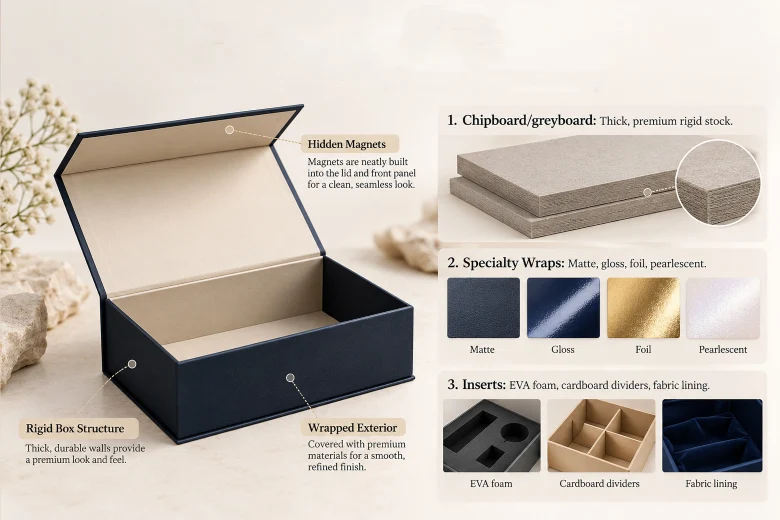
Materials define the durability and feel of your custom boxes.
Common options used in magnetic closure boxes include:
- Chipboard/greyboard: Thick, premium rigid stock.
- Specialty Wraps: Matte, gloss, foil, pearlescent.
- Inserts: EVA foam, cardboard dividers, fabric lining.
Structure & Layout of a Magnetic Closure Box
Speaking of how to make a magnetic closure box, it usually follows a simple but strategic layout:
- Rigid Base
Made of thick chipboard or greyboard that provides strength and durability and acts as the main body of the box.
- Lid with Flap
The lid extends into a flap that folds over the front edge. Magnets are embedded inside this flap and the front wall of the box. When closed, the flap snaps securely into place.
- Hidden Magnets
Magnets are embedded inside the flap or lid. They remain invisible, giving the box a seamless look. The closure feels smooth and premium, unlike simple tuck-end boxes.
- Outer Wrap
Decorative paper or specialty finish (matte, gloss, kraft, foil) that covers the rigid board and hides the magnets. It defines the box’s branding and tactile feel.
- Interior Space
An open cavity holds products and can include inserts (foam, cardboard, fabric lining) for protection and presentation.
- Opening Style
The standard layout opens from the front with a flap. Variations include book‑style (side opening) or flip‑top (lid lifts upward).
Design Features That Elevate Magnetic Boxes
Design is more than decoration. It’s about structure, usability, and how buyers interact with the product. Layout is a critical part of this.
- Custom Printing
You can print your logo, brand colors, and storytelling visuals directly on the box. Inside printing adds surprise and depth — perfect for brand messages or product instructions. Plus, adding QR codes can connect buyers to digital experiences like tutorials or loyalty programs.
- Finishing Touches
Choosing the right finish for your magnetic box is also essential. Foil stamping, embossing, debossing, and spot UV add prestige. Placement depends on the box layout — for example, foil on the flap highlights the closure.
- Textures & Laminations
Soft‑touch, gloss, matte, or kraft finishes enhance tactile appeal.
- Inserts & Compartments
EVA foam, cardboard, or fabric inserts protect products and deliver a more premium presentation.
Sustainability in Magnetic Closure Boxes
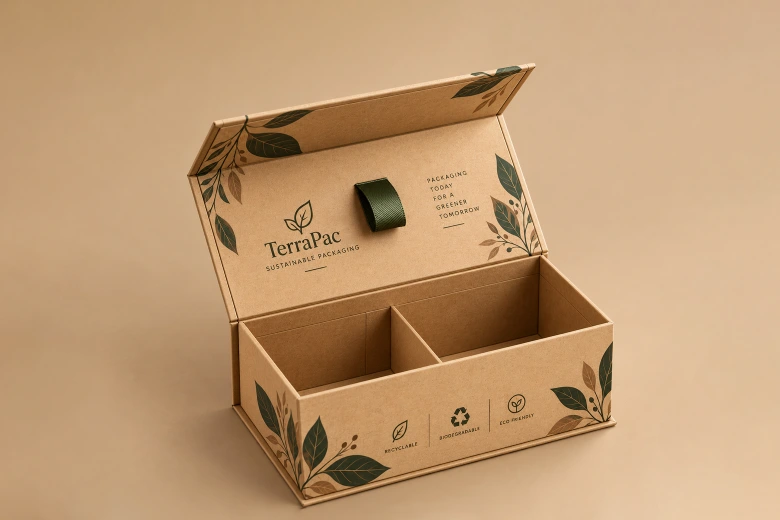
Eco‑friendly rigid box packaging is no longer optional. Buyers expect it. Magnetic closure boxes can be sustainable when made with recyclable chipboard, kraft wraps, and soy‑based inks. Plus, the foldable designs can reduce shipping volume and carbon footprint.
Another advantage is reusability. Because magnetic closure boxes are durable and attractive, buyers often keep and reuse them for storage, gifting, or organizing. This extends the box’s lifecycle and reduces waste.
Uses of Magnetic Closure Boxes
Magnetic boxes are flexible. They serve multiple industries, such as:
- Luxury Retail: Ideal for jewelry boxes, watch packaging, and perfume boxes.
- Cosmetics: Perfect for skincare sets and makeup boxes.
- Electronics: Preferred for packaging phones, accessories, and premium gadgets.
- Food & Beverage: Deliver a luxury presentation for teas, spirits, and gourmet confectionery.
- Subscription Boxes: Best for sending apparel and lifestyle products.
- Corporate Gifting: Perfect for PR boxes and promotional gifts.
Each use case benefits from a premium feel and secure closure.
Buyer Psychology & Unboxing Experience
Unboxing is no longer private. It’s shared online. Magnetic closure boxes create memorable rituals that buyers want to show off.
Here’s how.
- Sensory Impact: The snap of the magnet, the smooth reveal, the tactile finish — all create an emotional connection.
- Social Sharing: Buyers post unboxing videos on Instagram, TikTok, and YouTube. Your packaging becomes free advertising.
- Perceived Value: An exclusive layout of a magnetic closure box improves product presentation and makes it feel more expensive. Even mid‑range items gain prestige.
- Brand Loyalty: Memorable unboxing encourages repeat purchases. Buyers associate the brand with quality.
- Psychological Effect: A well‑designed box signals care. It tells buyers the brand values them.
Cost & Practicality Perspectives
Magnetic closure boxes balance premium appeal with practical considerations. Here are the key points to keep in mind:
- Material Choice
Rigid chipboard magnetic boxes cost more because they use thick board and premium wraps. Foldable magnetic boxes are more affordable since they use less material and ship flat.
- Production Complexity
Embedding magnets adds to manufacturing cost compared to standard rigid boxes. Extra finishes like foil stamping or embossing also increase expenses.
- Shipping & Storage
Foldable magnetic boxes are practical for e‑commerce. They reduce warehouse space and freight costs. Rigid magnetic boxes take more room but deliver unmatched durability and luxury.
- Sizing Efficiency
Costs rise if your boxes are oversized. That’s why you must measure magnetic closure box dimensions correctly—ensuring a snug fit reduces wasted material and shipping volume.
- Brand Positioning vs Budget
Luxury brands often justify higher packaging costs because premium boxes elevate perception and support higher product pricing. For mid‑range products, foldable magnetic boxes balance cost efficiency with premium appeal.
- Return on Investment (ROI)
Rigid magnetic boxes are best when prestige and durability matter most. Foldable magnetic boxes are the practical choice when cost savings and shipping efficiency are priorities.
Factors to Consider When Choosing the Right Magnetic Closure Box
Beyond cost and practicality, consider other essential factors when choosing the right magnetic box.
- Product Weight & Size: Heavy or bulky items need rigid magnetic boxes for strength. Smaller or lighter items can use foldable designs.
- Fragility of the Product: Fragile items benefit from book‑style boxes with inserts for protection.
- Unboxing Experience: If you want storytelling or surprise, book-style boxes allow inside printing, while flip-top boxes create sleek, modern reveals.
- Customization Potential: Consider whether you need foil stamping, embossing, or inserts. Some box types offer more flexibility for branding and finishing.
Overall, rigid magnetic boxes are best when prestige and durability matter most. Foldable magnetic boxes are the practical choice when cost savings and shipping efficiency are priorities.
Final Thought
Indeed, magnetic closure boxes are more than packaging. They tell stories, build trust, and drive sales.
Whether rigid, foldable, book‑style, or flip‑top, the right box elevates your product and strengthens buyer loyalty.
Always design with product, brand identity, and buyer in mind. Choose materials, designs, and finishes that align with your goals. Remember that your packaging is not the end. It is the beginning of buyer engagement.
FAQs
What are magnetic closure boxes?
Magnetic closure boxes are rigid or foldable packaging solutions. They use hidden magnets embedded in the flap or lid. These magnets snap shut with precision. The closure feels smooth, premium, and reliable.
What products are best suited for magnetic closure boxes?
Magnetic closure boxes are ideal for luxury items like jewelry, perfumes, electronics, cosmetics, and premium gifts.
How durable are magnetic closure boxes?
Very durable. The rigid board construction and hidden magnets provide strength, long‑lasting use, and secure closure.
Are magnetic closure boxes cost‑efficient?
Yes, especially foldable designs. They ship flat, save storage space, and reduce logistics costs while still delivering a premium feel.