
Packaging is not just a wrapper. It’s the first story your product tells, the stage where your brand performs before a buyer even touches what’s inside.
In crowded aisles and digital marketplaces, packaging can mean the difference between being noticed and being ignored. Done well, it protects, persuades, and promotes. Done poorly, it undermines trust and kills sales.
Let’s dive beyond the basics —from life cycle assessments to digital twins, from DIM weight pricing to Net Packaging Score—so your packaging strategy doesn’t just keep up; it leads.
Define the Purpose
Without purpose, your packaging becomes decoration. Purpose anchors design.
For example:
- Protection: Fragile goods need cushioning and durability.
- Presentation: Luxury items require elegance and premium finishes.
- Efficiency: E-commerce packaging must be compact and frustration-free.
- Experience: Subscription boxes should delight during unboxing.
- Define the role of your packaging first — every design choice flows from this foundation.
Know Your Audience
Product packaging must resonate with buyers, not just designers.
- Gen Z: Bold colors, eco claims, QR codes.
- Millennials: Minimalism, authenticity, Instagram appeal.
- Luxury buyers: Matte finishes, embossing, tactile details.
- E-commerce shoppers: Compact, resealable, easy-to-open designs.
Understanding your audience helps your packaging connect emotionally and drive sales.
Include Sustainability with Authority
Eco-friendly packaging is no longer optional. Buyers demand proof.
Consider:
- FSC-certified paper that signals responsible sourcing.
- Recyclability icons to guide customers on disposal.
- Reduce your carbon footprint with lightweight materials (kraft, paperboard) that lower emissions.
- Biodegradable films with compostable plastics like PLA that break down naturally.
Don’t forget the Life Cycle Assessment (LCA), which tracks energy use, emissions, and waste from production to disposal.
Go beyond “recyclable.” Show measurable sustainability with certifications and LCA.
Understand the Compliance and Standards
Compliance builds customer trust and prevents costly mistakes.
Make sure you understand:
- ISO 18601 for sustainability standards.
- FDA rules for food and cosmetics labeling.
- Amazon requirements for e-commerce packaging guidelines.
- Hazmat codes for standards for chemicals and dangerous goods.
Packaging that meets standards signals your brand’s professionalism and reliability.
Implement Color Psychology
Colors influence customers’ emotions and buying decisions.
Implement color psychology into your packaging design, like:
- Red: Urgency, appetite, excitement.
- Blue: Trust, calm, professionalism.
- Green: Eco-friendliness, health.
- Black: Luxury, exclusivity.
Choose colors strategically — they shape perception and trigger emotions.
Typography That Works
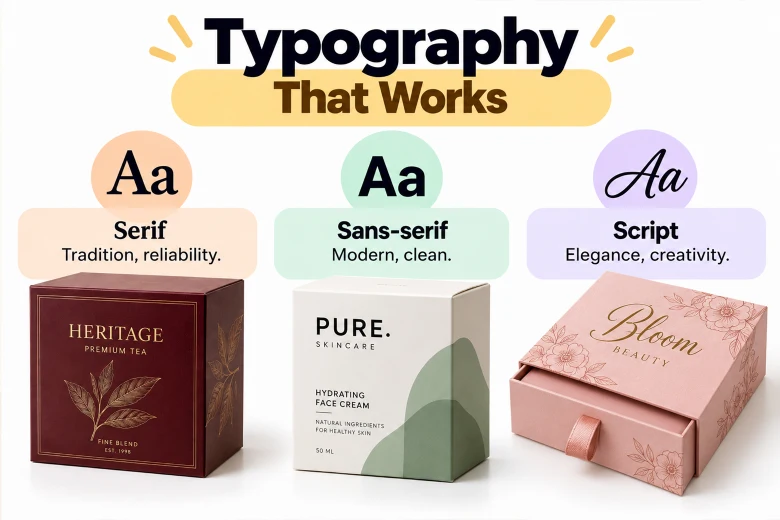
The fonts you use on your product packaging carry personality and meaning.
- Serif: Tradition, reliability.
- Sans-serif: Modern, clean.
- Script: Elegance, creativity.
Remember that typography must remain legible even in thumbnails. Clear fonts improve online visibility.
Know Packaging Shape and Ergonomics
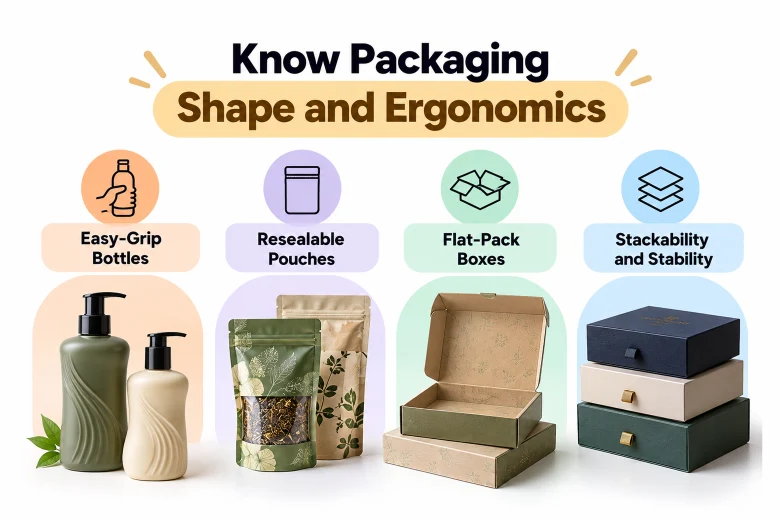
Packaging shape is more than aesthetics. It determines how customers interact with your product, how efficiently it ships, and how well it performs in storage. In addition, ergonomics (the science of usability) ensures packaging feels intuitive and convenient.
Easy-Grip Bottles
Contoured shapes or textured surfaces improve handling. Customers appreciate packaging that feels comfortable in hand, especially for beverages, cleaning products, or cosmetics.
Resealable Pouches
Mylar bags or pouches with zip locks or press seals extend product life and reduce waste. They encourage repeat use and add convenience for customers.
Flat-Pack Boxes.
Custom boxes designed to fold flat save space in warehouses and during shipping. They reduce storage costs and improve logistics efficiency. For example, tray sleeve boxes for chocolates and cosmetics, tab-lock mailer boxes for subscriptions, or simple folding cartons.
Stackability and Stability
Packaging that stacks neatly improves shelf presentation and warehouse organization. You can choose rigid drawer boxes with a luxury slide‑out style that stack neatly, or magnetic closure boxes that stand stable on shelves.
Overall, stable, stackable designs protect products and simplify storage from warehouse to shelf.
Choose the Box Sizes and Volume Options
Choosing the right box size is more than a technical detail. It affects your product safety, shipping costs, shelf appeal, and customer satisfaction. A box that’s too small risks damage. A box that’s too large wastes material and money. Smart sizing is both science and strategy.
Industry-Standard Sizes
Many industries have established standard dimensions. For example, bakery boxes often follow 6 x 6 x 3 inches for cupcakes, 10 x 10 x 5 inches for cakes, and 14 x 10 x 4 inches for pastries. Standard sizes ensure compatibility with shelving, shipping, and customer expectations.
Let’s have a look at the industry-standard sizes you should note.
| Industry | Common Box Sizes (inches) | Typical Use Cases |
| Retail | 4” x 6”
6” x 9” 8” x 10”
|
Snack packs, stationery, small electronics, promotional items |
| Cosmetics & Beauty | 2” x 2”
3” x 4” 4” x 6”
|
Skincare jars, makeup kits, perfume boxes, sample packs
|
| Food & Beverage | 3” x 4”
4” x 6” 10” x 14”
|
Chocolates, cereals, frozen goods, bulk grains
|
| Pharmaceuticals | 2” x 3”
3” x 5” 5” x 7”
|
Medicine cartons, vitamin packs, blister packaging
|
| Apparel & Fashion | 6” x 9”
8” x 10” 12” x 15”
|
T‑shirts, accessories, luxury apparel boxes
|
| Bakery & Confectionery | 4” x 4”
6” x 6” 8” x 10”
|
Pastries, cakes, cookies, takeaway boxes
|
| Electronics
|
6” x 9”
10” x 14” 12” x 18”
|
Mobile phones, headphones, gadgets, small appliances
|
| CBD & Wellness
|
2” x 4”
3” x 5” 6” x 9” |
Oils, tinctures, pre‑rolls, supplement bottles
|
Custom Sizes for Unique Products
Not all products fit neatly into standard boxes. Custom sizing lets you design packaging that fits your product perfectly. This reduces movement during transit, prevents damage, and creates a polished presentation.
Volume Optimization
Beyond dimensions, you must also consider volume. A box should maximize internal space without excess air gaps. Optimized volume reduces DIM weight charges and lowers material use.
Customer Convenience
Right-sized boxes are easier for customers to carry, store, and reuse. Oversized packaging frustrates buyers and signals wastefulness.
Choose the Right Printing Method
Printing defines how your brand’s visuals come alive on custom packaging boxes. Choosing the right method balances cost, quality, and scalability.
- Digital Printing: Best for short runs, prototypes, and variable data (like QR codes or personalization).
- Offset Printing: Ideal for large volumes. Produces sharp, consistent colors with lower unit cost at scale.
- Flexography: Common for corrugated boxes and flexible packaging.
- Rotogravure: High‑quality photo‑realistic printing, often used for flexible films and premium packaging.
- Screen Printing: Adds bold, opaque colors on specialty papers, plastics, or textiles.
Apply the Finishing and Special Effects
Finishes elevate your packaging from functional to memorable. They add texture, shine, and tactile appeal that influence perception.
- Matte & Gloss Coatings: Matte feels sophisticated and subtle; gloss adds vibrancy and shine.
- Foil Stamping: Metallic foils applied with heat and pressure. Perfect for luxury branding and logos.
- Embossing & Debossing: Raised or recessed impressions create tactile engagement. Adds depth and a premium feel.
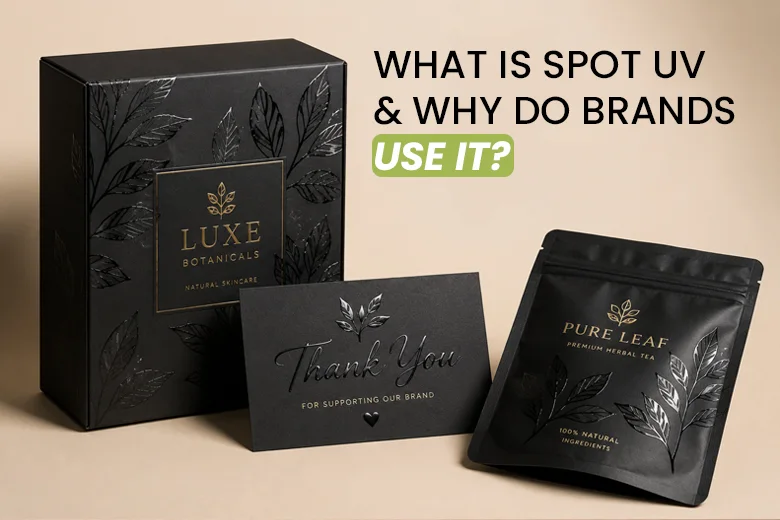
- Spot UV: Gloss coating applied selectively to highlight logos or text. Creates contrast and focus.
- Soft‑Touch: Velvety finish that signals elegance and premium quality.
- Holographic & Metallic Effects: Eye‑catching finishes that stand out on shelves and appeal to younger audiences.
Finishing effects don’t just decorate; they signal quality, elevate perception, and make your brand unforgettable.
Focus on the Unboxing Experience
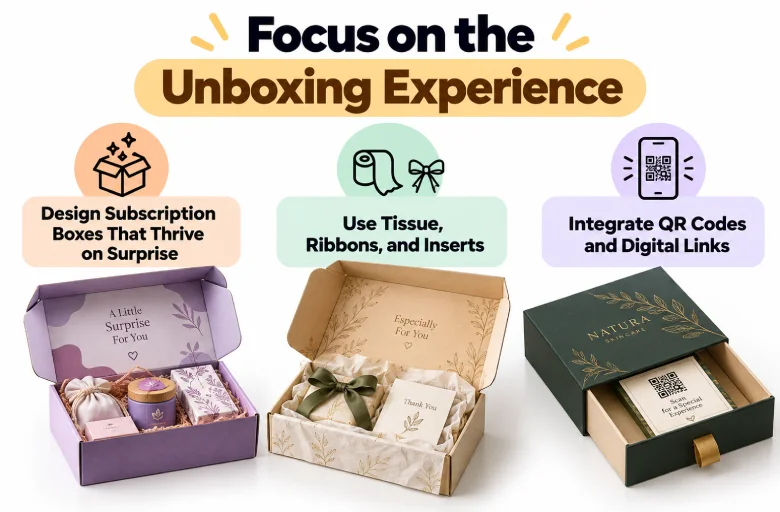
Unboxing is no longer just a moment of opening a package — it has become a cultural event. From YouTube videos to TikTok reels, millions of people watch others unbox products. This ritual transforms packaging into entertainment, marketing, and retention strategy all at once. Studies show that buyers who enjoy unboxing are more likely to reorder. The emotional high of a satisfying reveal creates loyalty.
Here’s how to focus on the unboxing experience.
Design Subscription Boxes That Thrive on Surprise
When buyers don’t know exactly what’s inside, the packaging becomes part of the product itself. Clever inserts, hidden compartments, or layered reveals in subscription boxes can turn unboxing into a memorable experience customers look forward to month after month.
Use Tissue, Ribbons, and Inserts
Tissue paper, ribbons, and branded inserts signal exclusivity and care. These tactile details make customers feel valued and reinforce your brand’s premium positioning.
Integrate QR Codes and Digital Links
Adding QR codes or NFC tags connects the physical unboxing to digital engagement. These features bridge offline packaging with online communities, keeping buyers engaged beyond the first purchase.
The modern unboxing experience is more than a reveal — it’s a retention tool, a marketing channel, and a loyalty driver. When your packaging is designed to surprise, delight, and connect, it transforms a simple transaction into an ongoing relationship with customers.
Storytelling Through Packaging
Well-designed custom packaging solutions communicate your brand identity, values, and emotions without words.
How to strategically implement it?
- Share brand heritage: Use design cues to convey your brand’s history and tradition. This builds authenticity and trust.
- Highlight sustainability efforts: Showcase eco milestones, certifications, and your business commitments. Buyers value transparency.
- Origin stories create authenticity: Inserts or QR codes can explain where ingredients come from. This adds depth and credibility.
Narrative psychology builds bonds. Stories create emotional connections. Buyers remember stories longer than features.
Packaging that tells a story transforms products into experiences. It builds loyalty and makes your brand unforgettable.
Apply Smart Packaging Technology
Packaging is no longer static. With digital innovation, it has become interactive, traceable, and intelligent. Adopting smart packaging technology shows your brand’s future readiness.
Make sure you apply:
- NFC tags to verify product authenticity.
- QR codes to track supply chains.
- AR experiences that engage buyers.
Labeling and Information Hierarchy
Your labels must inform quickly and clearly. Include your product’s ingredients and compliance info on labels to build customer trust.
Here’s the information hierarchy: Product name → Benefits → Legal Text.
You can also use icons to simplify information. And remember that buyers spend less than 7 seconds scanning packaging. So, design your labels for speed and clarity to win attention.
Consider Logistics and Storage
Your packaging must survive the journey from factory to customer. Logistics and storage considerations are often overlooked, but they directly impact cost and efficiency.
To ensure you manage logistics and storage efficiently, consider:
- Stackable boxes that save space.
- Use moisture-resistant materials to protect your goods.
- Strategic barcode placement that ensures efficiency.
- Return-friendly packaging (resealable designs) to reduce costs.
Logistics-friendly packaging is not just practical — it’s profitable. By designing for storage, transport, and returns, you can save money and be more efficient.
Measure Cost vs Value
Packaging costs go beyond material prices. True value comes from balancing expense with performance, perception, and efficiency.
Let’s measure them.
- Damaged goods destroy customer trust
Weak packaging leads to breakage. Customers blame your brand, not the courier. This damages your reputation and increases returns.
- Excess packaging raises shipping costs
Oversized boxes increase shipping fees and frustrate eco-conscious buyers. Smart sizing reduces waste and expense.
- Smart design balances cost and value
Efficient packaging saves money without compromising quality. It shows buyers you care about both affordability and sustainability.
- Total Cost of Ownership (TCO)
TCO means considering production, shipping, returns, and disposal costs. It helps you stay financially aware and think strategically.
Testing and Prototyping
Your packaging isn’t market-ready until it’s tested. Prototyping and stress‑testing ensure designs are durable, compliant, and appealing before mass production. Skipping this step risks costly recalls, damaged goods, and poor customer experiences.
What should you do?
- Drop tests for durability: Drop your packaging to simulate falls and impacts during shipping. Make sure your packaging protects products under real‑world conditions.
- Climate and shelf‑life tests: Food, pharmaceuticals, and frozen goods packaging require climate testing to guarantee safety and compliance.
- Focus groups for appeal: Collect customers’ feedback on usability, aesthetics, and messaging.
- Material prototyping: Test different materials (corrugated, rigid stock, kraft) to understand cost, sustainability, and performance trade‑offs.
By validating durability, compliance, and appeal, you avoid costly mistakes and deliver packaging that performs in the real world.
Retail and E‑Commerce Optimization
Your product packaging must perform in two very different worlds — the physical retail shelf and the digital marketplace. Optimizing for both environments ensures your brand wins across channels.
Retail
How should retail packaging be?
- Shelf Impact
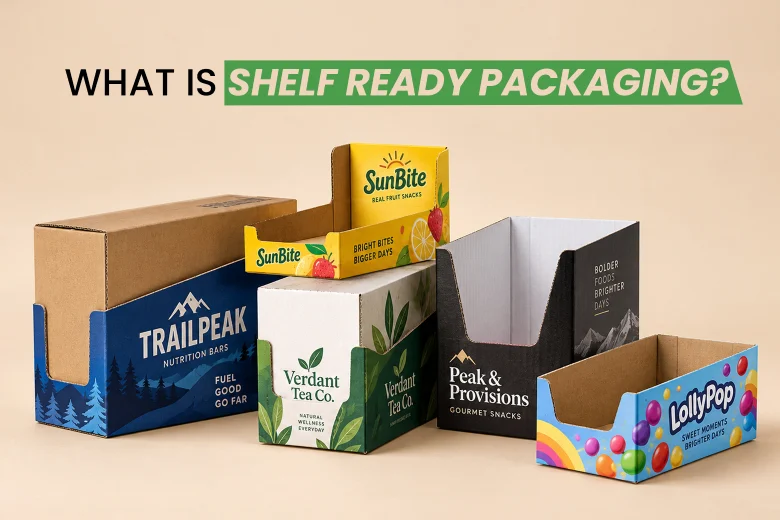
Retail packaging needs strong visual appeal. Bold colors, clear typography, and distinctive shapes help products stand out. Shelf‑ready packaging also matters — designs that stack neatly and display well make retailers more likely to feature your product prominently.
- Compliance and Labeling
Barcodes, nutritional facts, and regulatory information must be visible and accurate. Retailers often reject products with poor labeling or hard‑to‑scan barcodes.
E‑Commerce
E-commerce packaging requires different perspectives than retail.
- Thumbnail Visibility
Online shoppers judge packaging from tiny images. Fonts, your logo, and colors must remain clear at small sizes. A design that loses clarity in thumbnails risks being ignored in search results.
- Returns and Convenience
Buyers expect hassle‑free returns. Resealable packaging makes the process smoother, reduces frustration, and builds trust.
- Compact Shipping Efficiency
Oversized packaging increases dimensional weight (DIM weight) charges. Smart, compact designs minimize empty space, cut shipping fees, and reduce environmental impact.
- Marketplace Algorithms
Platforms like Amazon reward frustration‑free packaging with better visibility in search rankings. This hidden factor directly impacts your sales performance.
Retail Packaging vs E‑Commerce Packaging
Here’s a quick guide to optimize your retail and e-commerce packaging.
| Aspect | Retail Packaging | E‑Commerce Packaging |
| Primary Goal | Attract attention on shelves | Survive shipping & look good in thumbnails |
| Design Focus | Bold colors, clear typography, shelf appeal | Compact size, clarity at small image scale |
| Compliance Needs | Barcodes, nutritional facts, legal labeling | Marketplace rules (Amazon, DIM weight) |
| Customer Experience | Easy to carry, visually appealing | Easy to open, reseal, and return |
| Logistics | Stackability, display readiness | Shipping efficiency, reduced DIM weight costs |
| Marketing Role | Impulse buying, brand storytelling | Reviews, repeat purchases, algorithm ranking |
Measure with Metrics
Your packaging success must be measured. Without metrics, your design decisions remain guesswork.
Here are the metrics you should measure.
- Sales lift after redesign: Track revenue changes after packaging updates. This shows direct impact.
- Customer reviews mentioning packaging: Positive mentions prove design success. Negative ones highlight areas for improvement.
- Reduced return rates: Strong packaging prevents damage. Lower returns save money and improve satisfaction.
- Net Packaging Score (NPS): This unique metric measures emotional response to packaging, not just product quality.
By tracking sales, reviews, returns, and NPS, you prove impact and continuously improve.
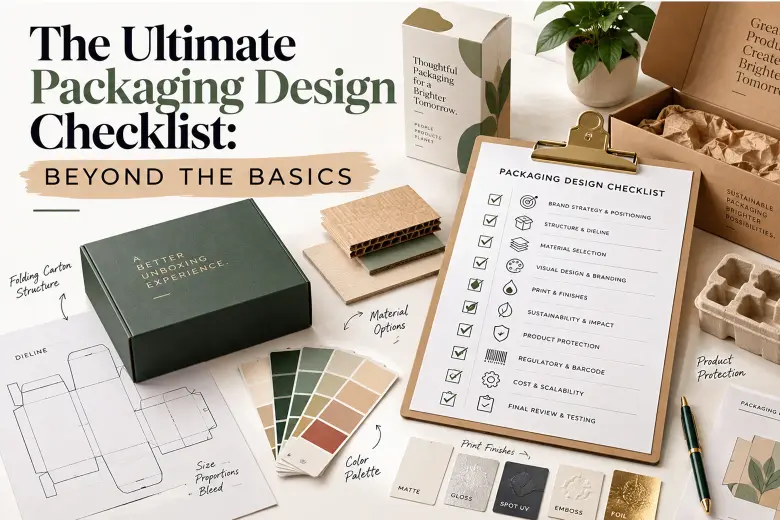
Final Checklist
Now let’s make a checklist to ensure you don’t miss anything.
- Purpose defined.
- Audience understood.
- Sustainability integrated.
- Compliance checked.
- Psychology applied.
- Box size selected.
- Shape and ergonomics optimized.
- Printing method chosen.
- Finishing and special effects applied.
- Unboxing experience designed.
- Smart technology integrated.
- Logistics streamlined.
- Retail & e‑commerce needs balanced.
- Testing and prototyping completed.
With this checklist, your packaging becomes a strategic asset — protecting, persuading, and promoting.
Closing Thoughts
No doubt, product packaging is not a passive container. It is an active force that shapes perception, drives sales, and builds loyalty. Done right, it transforms from a cost center into your business’s growth engine.
Make sure you do the checklist above and treat your packaging as a strategic superpower. It’s not just what holds your product—it’s what holds your brand together in customers’ minds.
FAQs
Why is packaging design so important?
Packaging is your product’s first impression. It protects items, attracts buyers, and communicates brand values, influencing purchase decisions more than advertising.
What’s the difference between retail and e‑commerce packaging?
Retail packaging focuses on shelf appeal and compliance, while e‑commerce packaging prioritizes shipping efficiency, durability, and easy returns.
How to know if a packaging design works?
Test it through drop and climate trials, gather feedback from focus groups, and track metrics like reduced return rates, positive reviews, and sales lift after redesign.
Which metrics are used to measure packaging success?
Key metrics include sales lift after redesign, customer reviews mentioning packaging, reduced return rates, and Net Packaging Score (NPS) to see customers’ satisfaction.